






What Are the Top 10 Types of Solar Inverters?

Solar power is moving from a niche technology into everyday infrastructure. IRENA’s Renewable Capacity Statistics 2025 reported approximately 585 gigawatts of renewable capacity added globally in 2024. Solar represented about 452 gigawatts of that growth. Behind each panel array sits a critical device: the solar inverter. It converts direct current into usable alternating current and manages grid interaction, system protection, and energy performance.

This guide examines the top 10 types of solar inverter used in homes, commercial buildings, utility projects, and independent systems. The categories include string inverters, microinverters, central inverters, hybrid inverters, battery inverters, and off-grid models. Some overlap. That is important. A hybrid inverter can also be grid-connected, while a battery inverter may operate within an off-grid system. The boundaries are not perfectly clean.

The International Energy Agency’s Renewables 2024 report identifies solar PV as the dominant source of new renewable capacity growth. This expansion increases the need for practical inverter selection, not just higher panel output. Installers must consider array voltage, maximum power point tracking, shading, battery chemistry, backup loads, and local grid requirements. A sunny roof with one shaded chimney may benefit from a different architecture than a clear utility-scale field.

Small details matter. A poorly matched inverter can increase clipping, reduce monitoring accuracy, or complicate maintenance. Yet efficiency figures alone can mislead buyers. The best choice depends on project size, roof design, storage plans, safety requirements, and expected operating conditions. This comparison offers a grounded starting point, while acknowledging that real installations require qualified engineering review.
What Are the Top 10 Types of Solar Inverters?

Solar Inverter Basics and Their Role in Solar Power Systems

What Are the Top 10 Types of Solar Inverters?

Solar inverters convert direct current from panels into alternating current for household appliances and the utility grid. They also monitor voltage, frequency, temperature, and system performance. In practical installations, the inverter is the system’s control point, not merely a power converter. A well-sized unit can improve safety, energy use, and long-term reliability. Poor sizing may cause clipping, shutdowns, or unnecessary battery wear.

Common categories include string, microinverter, central, hybrid, battery, grid-tied, off-grid, transformerless, multi-mode, and power-optimized inverter systems. These labels can overlap. A hybrid inverter may also operate off-grid, while a string system can use separate power optimizers. String inverters suit clear, unshaded roof sections and usually simplify maintenance. Microinverters work beneath individual panels, helping arrays with shade or different roof angles. Central units serve large installations, where high capacity matters more than rooftop flexibility.

Hybrid and battery inverters manage stored energy, backup loads, and changing electricity prices. Off-grid systems require careful battery and generator coordination. Grid-tied systems must disconnect during outages, protecting utility workers. Field experience shows that heat, dust, cable length, and local rules affect performance as much as rated capacity. The perfect type does not always exist. A technically elegant design can still disappoint when monitoring is weak or maintenance access is ignored. Professional assessment should include roof layout, load patterns, climate, battery goals, and electrical requirements before selecting an inverter.

The Top 10 Types of Solar Inverters Explained

The Top 10 Types of Solar Inverters Explained

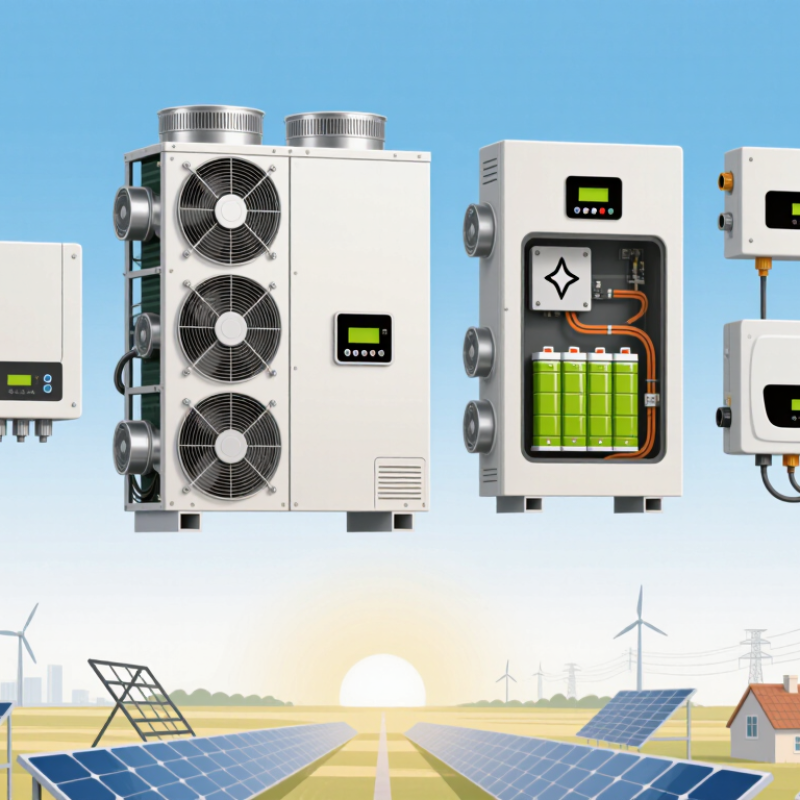
Solar inverters transform panel-generated direct current into usable alternating current. String inverters connect several panels in series and work well on clear, unshaded roofs. Microinverters sit behind individual panels, improving monitoring when shadows affect only part of an array. Central inverters handle very large commercial fields, where high power and simpler maintenance matter. Grid-tied inverters send electricity to household loads and the utility network, but usually stop during outages for safety.

Hybrid inverters coordinate solar panels, batteries, household circuits, and the grid. Off-grid inverters serve remote systems without utility access, often alongside batteries and backup generators. Battery inverters manage charging and discharging, converting energy in both directions. Multimode inverters can switch between grid-connected and independent operation, depending on settings and available storage. These systems need careful commissioning.

The remaining two categories describe internal design and system structure. Transformer-based inverters provide electrical isolation and can suit certain grounding requirements, although they are heavier. Transformerless inverters are lighter and often more efficient, but installation still requires correct protection and grounding. DC optimizer systems place small control devices near panels before a string inverter, reducing mismatch from uneven sunlight. Real installations are less tidy than diagrams. Categories can overlap, and the best choice depends on roof shade, battery plans, voltage requirements, local rules, and service access. A technically impressive inverter can still perform poorly when ventilation, cable sizing, or settings are overlooked.

What Are the Top 10 Types of Solar Inverters?

The chart compares representative rated output levels commonly associated with ten solar-inverter types. Microinverters are designed for individual panels, while string and hybrid inverters serve residential or commercial systems. Central, transformer-based, and utility-scale string inverters are typically used in larger solar plants. Transformerless, grid-tied, off-grid, and multimode systems describe different electrical designs or operating modes, so some categories can overlap.

How Solar Inverter Types Differ in Design and Performance

What Are the Top 10 Types of Solar Inverters?

Solar inverter types differ mainly in architecture, control, and energy-storage capability. The ten common categories are string, micro, central, hybrid, battery, off-grid, grid-tied, transformerless, transformer-based, and power-optimizer systems.
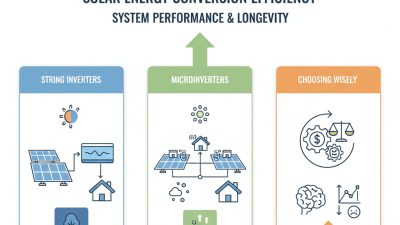
String inverters connect several panels in series, reducing hardware costs but increasing the impact of shading. Microinverters work at panel level, improving monitoring and mismatch control. Central inverters handle large arrays efficiently, although one failure can affect a substantial section.
Hybrid and battery inverters manage solar generation, storage, and household demand through coordinated controls. Off-grid models create a stable local supply, while grid-tied models synchronize with utility voltage and frequency. Transformerless designs are lighter and usually more efficient. Transformer-based designs provide electrical isolation but add weight and conversion losses. Power optimizers sit beside modules, then send conditioned DC power to a string inverter. The boundary is not always clean.
Performance depends on more than the name. The National Renewable Energy Laboratory reports that modern inverter efficiencies commonly reach roughly 96% to 99%, but real output falls with heat, clipping, wiring losses, and poor system sizing.
The IEA Photovoltaic Power Systems Programme recorded more than 400 GW of new solar capacity worldwide in 2023, increasing demand for reliable conversion equipment.
Field inspections repeatedly show that ventilation, connector quality, and firmware settings can matter as much as rated efficiency. A higher specification is not automatically better. That is easy to forget.

Key Factors for Comparing and Selecting Solar Inverters

What Are the Top 10 Types of Solar Inverters?

The ten common types include string, central, micro, hybrid, battery, off-grid, grid-tied, transformerless, modular, and power-optimizer systems. These categories overlap. A hybrid inverter can also be grid-tied and transformerless. For a small, unshaded roof, a string inverter often offers simpler maintenance and lower installation costs. Microinverters suit roofs with several orientations or partial shading. Central inverters fit large solar plants, where centralized servicing can be practical.

Selection should begin with site conditions, not brochure efficiency. IRENA’s Renewable Capacity Statistics 2024 recorded 1,419 GW of global solar capacity by the end of 2023. At this scale, small performance losses become financially meaningful. Compare maximum efficiency, weighted efficiency, MPPT voltage range, startup voltage, clipping tolerance, and expected operating temperature. Also check surge protection, monitoring quality, warranty terms, and local service availability. Real roofs are messier.

Battery-ready models need careful checks. Confirm usable battery voltage, charge limits, backup loads, transfer time, and emergency operating behavior. Off-grid systems require enough surge capacity for pumps, refrigerators, or workshop tools. Grid-tied systems must meet local interconnection rules and anti-islanding requirements. NREL reliability research repeatedly highlights heat, humidity, and electrical stress as major inverter risks. My first comparison mistake was focusing only on peak efficiency. It ignored shade, dust, and afternoon heat. A perfect datasheet can still produce disappointing energy.

Common Applications of Each Solar Inverter Type

What Are the Top 10 Types of Solar Inverters?

Solar inverter selection depends on the building, grid, climate, and energy goals. String inverters suit small homes with consistent sunlight across one roof plane. Microinverters fit roofs with shade, several angles, or many small sections. Power optimizers work well when panel-level monitoring is useful, but they still need a central inverter.

Central inverters serve large commercial arrays and utility-scale fields. They handle high power efficiently in open, uniform sites. Grid-tied inverters support homes that export surplus electricity to the utility network.

Hybrid inverters connect solar, batteries, and the grid for backup power. Battery-based inverters suit off-grid cabins, remote farms, and systems with frequent outages.

Off-grid inverters operate without utility support and often manage generators or battery banks. Multi-mode inverters can switch between grid, battery, and backup operation. Transformerless inverters are common in modern rooftop systems because they are compact and efficient. Three-phase inverters serve workshops, factories, and larger buildings with balanced electrical loads.

Real installations are less tidy. A shaded roof may need different equipment than the original plan suggests. A qualified installer should check voltage ranges, battery chemistry, protection devices, and local electrical rules. Monitoring data can reveal clipping, overheating, or unexpected nighttime consumption. Efficiency figures are useful, but they never replace site measurements. A cheaper inverter may create higher maintenance costs later.

© 2025 Australian Premium Solar