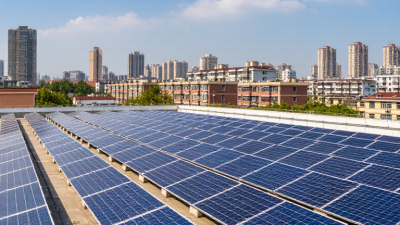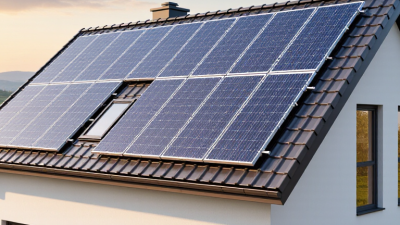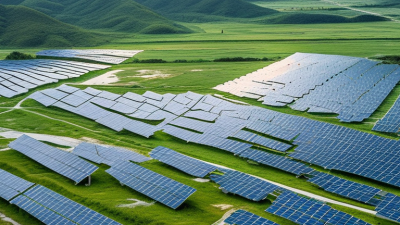







China has become a major manufacturing base for commercial solar panel systems, serving warehouses, factories, offices, and large rooftops worldwide. Yet, choosing the “top” manufacturer requires more than comparing nameplate efficiency or factory size. Buyers should examine production experience, product consistency, warranty terms, and after-sales support.
A reliable evaluation considers module technology, degradation rates, temperature performance, and resistance to humidity, salt mist, and mechanical stress. Factory audits can reveal details that brochures often omit, including cleanliness, automated inspection, and quality-control records. Independent certifications and recognized testing standards also provide useful evidence, although certification alone does not guarantee strong field performance. It is wise to review project references with similar roof conditions and operating climates.
Supplier transparency matters. Manufacturers should clearly explain cell sourcing, traceability, shipping procedures, and warranty responsibilities. Financial stability is important because a long warranty has limited value if support disappears after a few years. Installers should also check compatibility with inverters, mounting systems, monitoring platforms, and local grid requirements.
The ranking is not absolute. Market data changes.
Some evidence remains uneven, especially when companies publish limited failure statistics. That limitation deserves attention, not dismissal. A strong manufacturer combines scalable production with engineering discipline and responsive communication. The best choice may not offer the lowest quotation. It should deliver dependable energy, practical documentation, and measurable support throughout the project’s operating life. This guide compares leading Chinese manufacturers through those real-world criteria, while recognizing that local conditions can change the final decision.
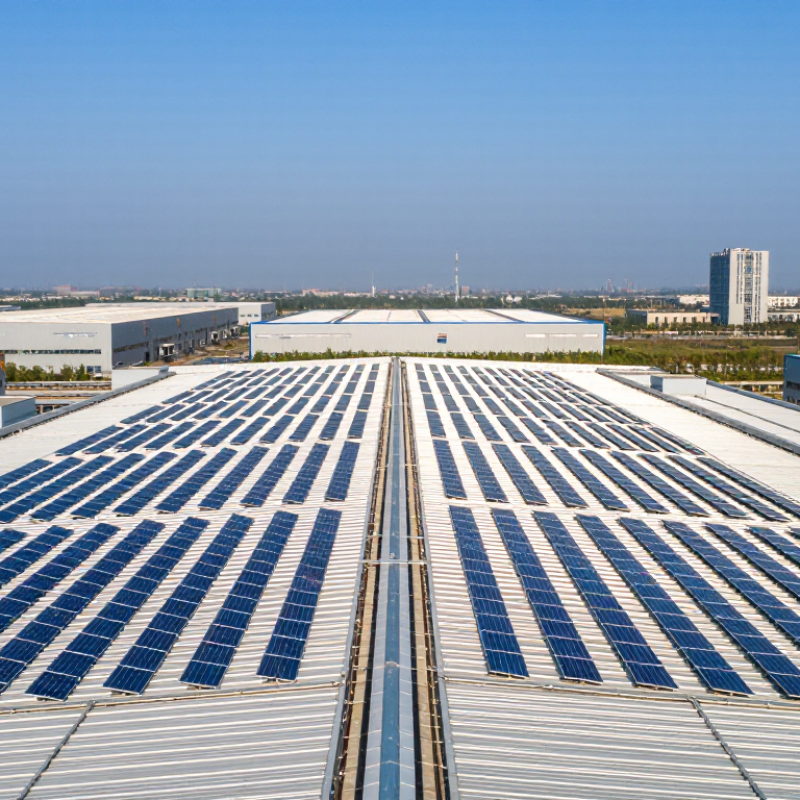
A leading commercial solar panel manufacturer is defined by more than annual production volume. It should show repeatable engineering, disciplined quality control, and clear responsibility after delivery.
In project reviews, I look for documented cell sourcing, lamination records, electroluminescence testing, and module performance data. Independent certifications matter, but current certificates matter more. They must match the actual factory, product design, and destination market.
A credible manufacturer also explains degradation rates, warranty limits, fire performance, and recycling arrangements without vague promises. That clarity builds trust with developers, installers, insurers, and lenders.
Tips: Request a sample quality dossier before signing. Check factory audit dates, production traceability, test reports, and failure-response procedures. Ask for references from projects with similar climate, mounting systems, and operating conditions. Small details reveal competence. For example, does the supplier explain humidity exposure, salt mist, snow load, and connector compatibility? If answers arrive slowly or change repeatedly, pause.
Commercial projects also need practical flexibility.
A strong manufacturer can support usable dimensions, electrical configurations, packaging, and delivery schedules without weakening quality controls. Its technical team should communicate clearly during design, installation, and unexpected field issues.
No factory is flawless. Even experienced teams can miss a packaging weakness or underestimate local weather. What matters is transparent correction, measurable improvement, and evidence that lessons reach the next production batch.
Price remains important, but the cheapest quotation may become expensive through downtime, replacements, or delayed commissioning. Procurement teams sometimes overlook that distinction during fast bidding rounds.
China’s commercial solar panel industry is concentrated in several strong manufacturing regions. Jiangsu, especially Changzhou and Suzhou, is known for mature supply chains, automated production, and large export capacity. Zhejiang combines module production with skilled electrical component manufacturing. Anhui, including Hefei, has expanded quickly through investment in advanced factories and research facilities.
Guangdong serves projects that need flexible design, fast customization, and access to southern ports. Jiangxi and Hebei also contribute important capacity, particularly for standard modules and supporting materials. In practical sourcing, location affects more than factory price. It can influence delivery time, inland transport, labor availability, and access to glass, cells, frames, and junction boxes.
I have found that nearby suppliers often respond faster, but this is not always true. A large factory may still have slower communication.
Commercial solar manufacturers in China serve projects across warehouses, factories, retail centers, and logistics parks. Their products often combine high power output with competitive production costs. However, commercial buyers should examine more than panel efficiency.
Reliable suppliers provide IEC certification, factory quality controls, and clear product traceability. Independent testing can verify temperature performance, degradation rates, and mechanical strength. A strong warranty helps, but its practical value depends on the manufacturer’s service network. Local support matters when damaged panels delay installation.
Global projects also require stable export experience. Manufacturers should explain packaging methods, shipping schedules, customs documents, and replacement procedures. Large projects may need consistent production across several batches. Small differences in dimensions or electrical output can complicate installation. Engineers should also check compatibility with inverters, mounting systems, and monitoring platforms.
Efficiency is not everything. A panel with slightly lower output may perform better in heat or limited light. Field conditions often change the decision. Dust, coastal air, snow, and high wind require different testing priorities. Some supplier websites still present impressive figures without enough operating context. That gap deserves careful questioning. Buyers should request test reports, production samples, and references from comparable commercial sites. Factory audits can reveal weaknesses that brochures rarely mention. Even experienced procurement teams sometimes underestimate after-sales communication across time zones. Clear technical documents reduce that risk.
| Supplier Profile | Primary Commercial Applications | Common Cell Technologies | Typical Module Power | Typical Module Efficiency | Bifacial Capability | Typical Product Warranty | Typical Performance Warranty | Common International Certifications | Global Commercial-Market Strengths |
|---|---|---|---|---|---|---|---|---|---|
| Large vertically integrated supplier | Utility-scale projects, large commercial rooftops, warehouses, factories, and ground-mounted installations | N-type TOPCon; selected product lines may also use advanced back-contact or heterojunction designs | 550–670 W | 21.5%–24.5% | Commonly available; bifaciality is generally around 70%–90%, depending on cell technology | 12–15 years for materials and workmanship | 25–30 years, commonly ending near 87%–90% of initial rated output | IEC 61215, IEC 61730, IEC 61701, IEC 62716, CE, UKCA, and market-specific fire or salt-mist testing | High production scale, broad project-bankability discussions, standardized logistics, and extensive overseas distribution |
| High-efficiency technology specialist | Space-constrained commercial roofs, premium industrial facilities, carports, and projects prioritizing maximum energy yield | Heterojunction, back-contact, and high-performance N-type architectures | 430–640 W | 22.0%–24.8% | Available on many product families; rear-side response depends on transparent backsheet or glass-glass construction | 15–25 years, depending on product series | 30 years on selected high-efficiency products; degradation rates may be approximately 0.25%–0.40% per year | IEC 61215, IEC 61730, IEC 61701, IEC 62716, CE, and region-specific grid or fire certifications | Higher power density, strong performance in limited roof areas, and improved temperature coefficients on selected technologies |
| High-volume mainstream module supplier | Commercial rooftops, agricultural buildings, public facilities, distributed-generation portfolios, and EPC-led projects | N-type TOPCon is increasingly common; legacy P-type PERC remains present in older inventories | 450–650 W | 21.0%–23.5% | Widely available in glass-glass and glass-backsheet formats | 12–15 years | 25–30 years, with annual degradation commonly specified at approximately 0.30%–0.40% | IEC 61215, IEC 61730, IEC 61701, IEC 62716, CE, and country-specific electrical safety approvals | Competitive cost per watt, broad availability, familiar installation procedures, and suitability for large procurement programs |
| Commercial rooftop-focused supplier | Flat-roof systems, metal roofs, membrane roofs, distributed industrial generation, and medium-sized business installations | TOPCon, PERC, and selected half-cut multi-busbar configurations | 400–620 W | 20.5%–23.5% | Available, especially for larger-format glass-glass modules | 12–15 years | 25–30 years | IEC 61215, IEC 61730, IEC 61701, CE, and applicable rooftop fire-resistance or mechanical-load certifications | Flexible module formats, compatibility with common commercial mounting systems, and strong distributed-generation support |
| Glass-glass durability specialist | High-humidity regions, coastal commercial sites, agrivoltaics, industrial rooftops, and projects requiring long service life | N-type TOPCon, heterojunction, and bifacial cell configurations | 500–670 W | 21.5%–24.5% | Strong fit for bifacial applications; rear-side gain depends on ground reflectivity, mounting height, and site design | 15–20 years on selected products | 30 years on many bifacial glass-glass products | IEC 61215, IEC 61730, IEC 61701, IEC 62716, extended damp-heat testing, and mechanical-load testing | Improved resistance to moisture ingress, lower encapsulant-related risk, and suitability for demanding environmental conditions |
| Export-oriented project supplier | International EPC projects, commercial portfolios, tenders, solar parks, and multi-country procurement programs | TOPCon and other N-type technologies, with product lines adapted to regional voltage, size, and regulatory requirements | 450–670 W | 21.0%–24.5% | Commonly offered in both monofacial and bifacial configurations | 12–20 years, depending on the contracted product | 25–30 years | IEC 61215, IEC 61730, IEC 61701, CE, UKCA, UL-related market approvals, and local grid or fire certifications where required | International documentation, established shipping channels, regional warehouses, technical support, and project-level quality-control processes |
| Specialty-format commercial supplier | Carports, curved or lightweight structures, small industrial roofs, façade systems, and projects with unusual dimensional constraints | Mono-crystalline PERC, TOPCon, lightweight laminate, or customized cell layouts | 200–550 W | 18.5%–23.5% | Product-dependent; bifacial performance is more common in rigid glass-glass formats | 10–15 years | 25–30 years, depending on the module construction | IEC 61215, IEC 61730, CE, and project-specific structural, fire, or building-integration approvals | Customized dimensions, lower system weight on selected products, and improved fit for non-standard commercial structures |
Top China Commercial Solar Panel Manufacturers?
Commercial solar panels in China are produced through a controlled sequence. Workers inspect silicon wafers before placing them into cell strings. Automated machines solder the connections, while cameras check alignment and surface damage. The cells are laminated between glass, encapsulant, and a protective backsheet. Aluminum frames are then fitted around each panel. Small defects matter. A tiny bubble can become a serious weakness after years of heat and moisture.
Testing continues after assembly. Manufacturers measure power output under simulated sunlight and compare voltage, current, and efficiency with the product specification. They also perform insulation, wet-leakage, thermal cycling, humidity-freeze, and mechanical-load tests. These procedures reveal failures that visual inspections miss. Independent laboratories may verify safety and performance against recognized international standards. Still, no factory process is flawless. A perfect test sample cannot represent every panel shipped to a large project, so traceability remains essential.
Tips: Ask for production records, serial-number tracking, and recent third-party test reports. Check whether the factory explains its acceptance limits clearly. Request electroluminescence images when possible; they can expose hidden cracks inside cells. Packaging deserves attention too. Damaged corners or loose pallets may create problems before installation. I have found that transparent documentation often says more than impressive efficiency figures.
Comparing China’s commercial solar panel suppliers requires more than checking wattage and price. The IEA PVPS Trends 2024 report estimated about 407 GW of new photovoltaic capacity worldwide in 2023, with China contributing roughly 216.9 GW. This scale shows strong manufacturing depth, but it does not guarantee consistent quality. Buyers should examine factory audits, production traceability, independent test reports, and delivery records for similar commercial projects.
Technical performance matters over decades. Compare module efficiency, temperature coefficient, bifacial gain, mechanical-load ratings, and documented degradation. NREL’s 2024 photovoltaic degradation research places the median annual degradation rate near 0.75%. A small difference can affect revenue across a large rooftop. Warranty language also deserves careful reading. Check whether product and performance warranties come from financially stable entities, and confirm claim procedures in writing.
Price remains important, but it can hide operational risks. Ask suppliers for measured flash-test data, sample inspection results, spare-part policies, and realistic lead times. Certification should match the installation market and project conditions. A factory may offer excellent samples yet struggle during peak demand. That possibility is often overlooked. I would also compare communication quality during technical discussions. Slow answers may signal future delays, though this is not proof. The strongest comparison combines independent verification, lifecycle cost, shipment reliability, and evidence from completed commercial sites. A cheaper module is not always the cheaper asset.
These industry reference ranges help commercial buyers compare suppliers without relying on brand names. Longer warranty coverage and service life can reduce lifecycle risk, but buyers should verify the current datasheet, certification, degradation terms, and after-sales conditions for each supplier.
Reference ranges reflect commonly specified commercial photovoltaic module benchmarks; actual values vary by product type and project conditions.
No, I will think about it in future.