How to Choose Rooftop Solar Panels for Your Business
Choosing rooftop solar panels for your business is an investment in energy resilience, not a simple equipment purchase. A flat warehouse roof, a small office, and a retail building create different design questions. Roof age, usable area, shade, structural capacity, electricity demand, and local weather all affect the decision. A panel that performs well on a sunny test site may deliver less value beside nearby towers or under frequent cloud cover. Real assessment matters.
This guide explains how to compare panel efficiency, degradation rates, warranties, fire safety documentation, inverter compatibility, and installer experience. It also considers your building’s daytime load, export rules, maintenance access, and available incentives. Ask for production estimates based on your address and hourly consumption, not attractive annual figures alone. Review assumptions carefully. A credible installer should explain energy losses, roof penetrations, monitoring systems, and replacement procedures in plain language. Their proposal should identify risks rather than hide them.
There is no universally best panel. Higher efficiency can help when roof space is limited, while a lower-cost option may suit a broad, unshaded roof. Brand reputation matters, but independent certifications and warranty terms matter more than polished sales claims. Some choices may look efficient on paper and disappoint in practice. That possibility deserves attention. With engineering checks, documented comparisons, and realistic financial modeling, your business can select rooftop solar panels that support dependable savings without treating uncertainty as a sales detail.
Assess Your Business Energy Needs and Rooftop Conditions
Before choosing rooftop solar panels, measure your business’s real electricity use.
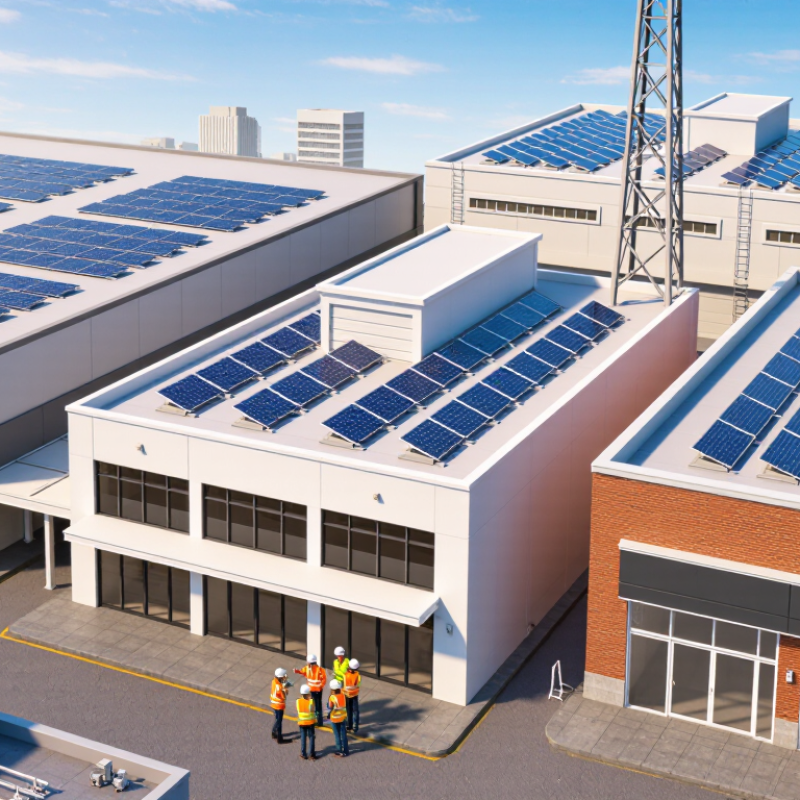
Review at least twelve months of utility bills, including seasonal peaks and demand charges. A restaurant may consume most power after sunset, while a warehouse often peaks during daylight. Compare these patterns with your planned operating hours. Measure the roof twice.
Inspect the rooftop from the ground and with a qualified professional.
Record usable area, roof age, drainage paths, access points, and shaded sections. Nearby walls, vents, and equipment can reduce panel output. A structural engineer should confirm that the roof can carry the system, including wind and maintenance loads. My first estimate was too optimistic because I ignored afternoon shade from a neighboring building.
Use a solar assessment based on local sunlight data, roof orientation, tilt, and temperature.
Ask an experienced installer to explain expected annual production, not just the panel’s peak rating. Check whether the electrical service can accept the proposed system. Local permits, fire access rules, grid requirements, and insurance conditions may also affect the design. Keep clear documentation of assumptions and measured conditions. Small roof obstructions can change the layout more than expected. Recheck them.
Compare Solar Panel Types, Efficiency, and Durability
Choosing rooftop solar panels for a business requires more than comparing advertised efficiency. Monocrystalline panels usually deliver about 20–23% efficiency, making them useful when roof space is limited. Polycrystalline panels often cost less but may need more area for the same output. Thin-film panels are lighter and can perform better in some heat or low-light conditions, yet their lower efficiency may require a larger installation.
Efficiency is only one measure. Check the panel’s temperature coefficient, annual degradation rate, and performance under partial shade. A module producing well at 25°C may lose output on a dark roof during a 40°C afternoon. Ask for independent test certificates, not only sales figures. Small details matter.
Durability should match your building’s environment. Review resistance to wind, hail, moisture, and heavy snow. Confirm the roof can support the panels, mounting system, and maintenance access. A qualified installer should inspect roof age, drainage paths, and nearby shade from tanks or taller buildings. Do not ignore warranty terms, either. Some promise strong output for decades, but exclusions can be unclear. Read them carefully.
No option is perfect. A high-efficiency panel may cost more and offer little benefit on a spacious roof. A cheaper system may create higher installation costs if it needs extra mounting space. Compare total energy yield, repair access, expected degradation, and local weather records before deciding. Forgetting one factor can weaken the entire investment.
Evaluate Installation Options, Costs, Incentives, and Financing
Choosing rooftop solar for a business starts with the roof, not the panels.
A site inspection should check structural capacity, shading, drainage, fire access, and roof age. A flat roof may suit ballasted frames, while a pitched roof often needs anchored rails. Each option affects labor, waterproofing, maintenance, and future replacement work. Ask for a written layout showing setbacks and cable routes. My first estimate was too optimistic because I ignored a shaded exhaust structure. Real measurements corrected it.
Compare the full installed cost, not just equipment.
Request separate figures for design, permits, structural upgrades, electrical work, monitoring, and removal. Production estimates should show assumptions for weather, shading, degradation, and downtime. Incentives can reduce taxable or upfront costs, but eligibility changes by location and business structure. Verify current rules with an official agency and a qualified tax professional. Financing may include loans, leases, or energy-payment agreements. Compare total payments, ownership, maintenance duties, and early-exit terms. A low monthly payment can hide a higher lifetime cost.
Tips:
Keep twelve months of electricity bills nearby. Match the system to daytime demand, especially refrigeration or machinery. Leave access around vents and service equipment. Get at least three detailed proposals. Ask who handles roof leaks. Do not accept guaranteed savings without documented assumptions. I would also budget for inverter replacement, even if the forecast omits it. That omission is easy to regret.
Check System Design, Safety Standards, and Maintenance Requirements
How to Choose Rooftop Solar Panels for Your Business
A suitable system begins with the roof, not the panel catalogue. Check roof age, load capacity, drainage paths, and shaded areas before comparing output ratings. A structural engineer should verify that mounting equipment can withstand local wind and weather conditions. Roof measurements should include vents, skylights, access routes, and emergency clearances. Small omissions can create expensive redesigns.
Ask for a complete electrical design, including inverter sizing, cable routes, grounding, surge protection, and accessible disconnect switches. The design should follow current electrical and fire safety standards in your region. Require documented testing and inspection by qualified professionals. Safety labels must remain visible after installation. A tidy drawing is not proof of a safe system.
Maintenance planning matters during daily operations. Choose equipment that allows safe access for inspections, cleaning, and thermal checks. Keep records of production, alarms, loose connections, and roof leaks. Arrange periodic inspections, especially after severe weather. Dust may reduce output faster than expected on low-slope roofs. I have seen maintenance plans fail because nobody assigned responsibility. That gap deserves attention. A realistic plan should identify who responds, how quickly, and which parts require trained technicians.
How to Choose Rooftop Solar Panels for Your Business
Typical Preventive Review Intervals for Commercial Rooftop PV Systems
These planning intervals are commonly used for commercial rooftop photovoltaic systems. They are practical benchmarks, not legal requirements; the final schedule should follow the equipment manufacturer’s instructions, site conditions, and local regulations.
System design: Confirm roof load capacity, available area, shading, drainage, access paths, module layout, inverter capacity, and the DC-to-AC sizing ratio before selecting panels.
Safety standards: Require documented design and commissioning checks aligned with applicable requirements such as IEC 62446-1, IEC 60364-7-712, NFPA 70 Article 690 where applicable, and local fire-access rules.
Maintenance: Use system monitoring for early fault detection, keep roof drains and access routes clear, inspect mounting hardware and cable management, and schedule electrical testing through qualified personnel.