






Choosing the best solar panel system in 2026 requires more than comparing efficiency percentages. Your roof, electricity habits, climate, and budget all change the answer. A shaded garage roof needs a different design from a south-facing roof with clear afternoon sunlight. Battery storage may also matter when evening demand is high.
The International Energy Agency reported that solar photovoltaic capacity reached about 1,420 gigawatts globally by the end of 2023. Its Renewables 2024 report expects solar to provide most new renewable capacity through 2030. The U.S. National Renewable Energy Laboratory also shows that module efficiency, temperature performance, degradation, and installation quality affect real-world output. Numbers on a showroom sheet never tell the whole story.
Jenny Chase, BloombergNEF’s solar analyst, has said, “Solar is now the cheapest source of electricity in history.” That statement is powerful, but it needs context. A cheaper panel may produce less energy on a hot roof. A premium panel may not repay its higher price in every location. The best solar panel system could be monocrystalline panels with a home battery, or a simpler grid-connected design. It depends.
BloombergNEF’s 2024 solar industry analysis also highlighted continued cost reductions across the supply chain. Yet equipment prices are only one part of ownership. Inverter replacement, roof repairs, warranties, labor, and local electricity rates can change the final result. I would not call any system universally best. That answer sounds convenient, but it is incomplete. A careful comparison should measure annual kilowatt-hours, usable battery capacity, degradation, and total lifetime cost before installation.
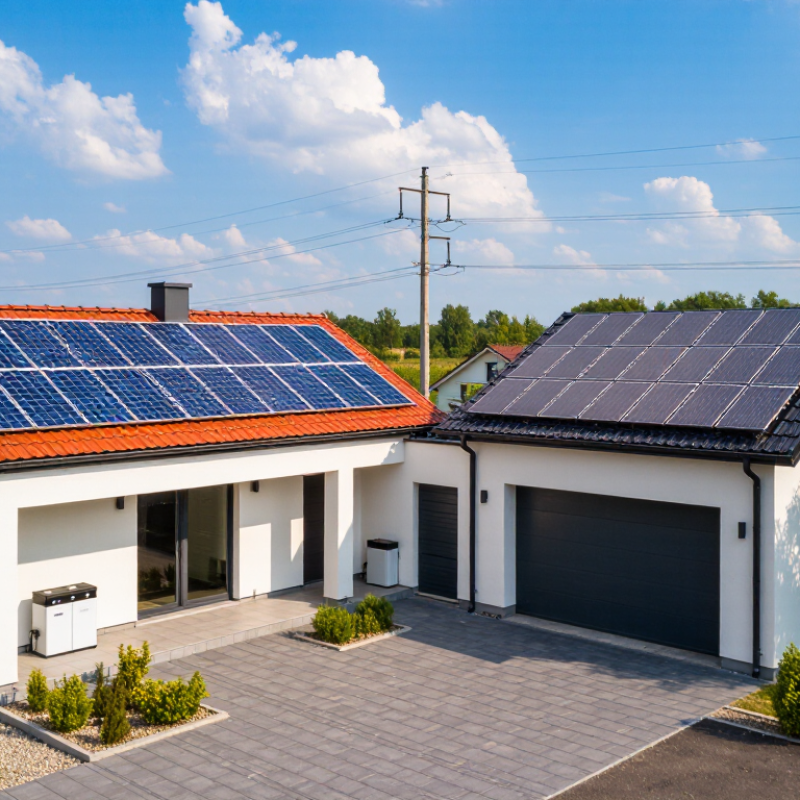
The best solar panel system in 2026 depends on roof space, sunlight, budget, and backup needs. Solar panel systems now include grid-tied, hybrid, and off-grid designs. Grid-tied systems usually cost less because they avoid large batteries. Hybrid systems add battery storage for evening use and outages. Off-grid systems need larger batteries, careful load planning, and a backup strategy.
Panel choices also matter. Monocrystalline modules deliver strong efficiency where roof space is limited. The Fraunhofer Institute’s Photovoltaics Report, published in 2025, places modern commercial crystalline-silicon modules broadly around 20–24% efficiency. Bifacial panels can produce extra energy from reflected light, but their gains depend on roof height, surface brightness, and installation angle. Thin-film panels remain useful on lightweight or unusually shaped surfaces. No option wins everywhere. That is the part many comparisons miss.
Tip: Request a site-specific energy model before choosing equipment. Check winter shading, roof age, inverter sizing, battery temperature, and local electrical requirements. The IEA PVPS Trends 2024 report recorded more than 1.4 terawatts of global photovoltaic capacity by the end of 2023, showing rapid adoption but not identical suitability. A reputable installer should explain assumptions and provide production estimates in kilowatt-hours. Ask for conservative figures, not perfect weather projections. Real roofs are untidy. Even a small chimney can change the design.
What Is the Best Type of Solar Panel System in 2026?
Choosing a solar panel system in 2026 requires more than reading its peak efficiency. Efficiency shows how much sunlight becomes electricity under laboratory conditions. Real performance changes with heat, shade, dust, roof angle, and wiring losses. A panel rated at 23% may produce less annual energy than a lower-rated panel on a cooler roof. Compare yearly energy estimates, not percentages alone.
Temperature coefficient deserves close attention. For every degree above the test temperature, output usually falls slightly. A smaller negative coefficient can help on hot summer afternoons. Ask for independent test results and current IEC safety certification. Review degradation figures, too. A strong first-year number can hide faster output loss later. Check whether warranty language matches the advertised figures.
During a roof assessment, map morning and afternoon shadows separately. Measure the roof carefully. One chimney can reduce a string’s production for several hours. Module-level monitoring may reveal this problem, but it adds equipment and maintenance. I would also compare inverter efficiency, cable length, ventilation, and battery losses. These details are easy to overlook. My comparison process is not perfect; weather models can overestimate production near trees. Request conservative estimates using local weather data and measured roof dimensions. Record every assumption beside the estimate.
Choosing the right solar system starts with your daily energy habits, not the highest advertised efficiency. A grid-tied system suits homes with reliable utility service and steady daytime consumption. It usually costs less because it needs no battery. However, it will not power your home during a grid outage. That detail is often missed.
A hybrid system adds battery storage for evening use and short outages. It fits households that run heat pumps, medical equipment, or electric vehicles after sunset. Review your last twelve months of electricity bills before sizing the battery. A large battery may feel reassuring, but poor usage estimates can make it unnecessarily expensive. I would not pretend that bigger always means better.
Homes far from utility lines may need an off-grid system. This setup requires careful planning, including battery capacity, backup generation, winter sunlight, and essential-load priorities. For the panels, high-efficiency monocrystalline designs can help when roof space is limited. Newer cell designs may perform well, but real results depend on shade, roof angle, temperature, and installation quality. Ask for production estimates based on your roof, not a nearby idealized example. A qualified installer should explain equipment ratings, electrical protections, maintenance access, projected degradation, and local inspection requirements. Get independent advice when the proposal feels rushed. Your future electricity needs may change, too.
For most homes in 2026, a high-efficiency monocrystalline system remains the practical choice. It produces strong output from limited roof space. IEA PVPS Trends 2024 reported more than 1.6 terawatts of global photovoltaic capacity by the end of 2023. Lazard’s 2024 LCOE report placed utility-scale solar generation near $29–$92 per megawatt-hour. Household prices vary widely, though. Roof condition, labor rates, permits, and electrical upgrades can change the final bill substantially. A cheaper panel is not always cheaper to own.
Battery storage deserves a separate calculation. A battery can shift daytime production into evening cooking, cooling, or vehicle charging. It also provides limited backup during outages. However, storage adds equipment, space, maintenance, and replacement risk. The U.S. National Renewable Energy Laboratory continues to show that battery costs depend heavily on usable capacity and installation design. Many households oversize batteries. That may look reassuring, but unused capacity weakens financial returns. I would compare annual electricity savings against the battery’s expected replacement timeline.
Tips: Request three itemized proposals. Check annual production, usable battery capacity, warranty terms, and roof-age assumptions. Ask whether the main electrical panel needs upgrading. Photograph the roof before installation. Small details matter. Shade from one chimney can reduce output across several modules. I would also test the installer’s forecasts against your last twelve utility bills. Forecasts are estimates, not promises.
| System Type | Typical Module Efficiency | Estimated Installed PV Cost* | Expected Service Life | Best Use Case | Storage Compatibility | Main Installation Requirements | Overall Assessment for 2026 |
|---|---|---|---|---|---|---|---|
| Monocrystalline Silicon | Approximately 19%–23% | About $2.50–$4.50 per watt before incentives | 25–35 years with gradual output decline | Most residential roofs, especially where roof space is limited | Highly compatible with lithium iron phosphate and other lithium-ion battery systems | Structurally sound roof, suitable orientation, minimal shading, inverter, electrical permit, and utility interconnection approval | Best general-purpose choice for most homeowners |
| Bifacial Silicon | Approximately 20%–24% front-side efficiency | About $2.60–$4.80 per watt before incentives | 25–35 years with gradual output decline | Ground mounts, elevated arrays, and reflective surfaces with good rear-side light exposure | Compatible with AC- or DC-coupled battery storage when properly designed | Open rear clearance, suitable mounting height, stable ground or roof structure, and careful shading analysis | Potentially excellent where site conditions allow rear-side generation |
| Thin-Film | Approximately 10%–18% | About $2.80–$5.00 per watt before incentives | 15–30 years, depending on technology and installation quality | Large roofs, lightweight structures, commercial buildings, and some low-light applications | Compatible with battery storage through properly sized inverters and charge controls | More installation area may be required; roof loading, attachment method, fire code, and weather sealing must be reviewed | Useful for specialized projects, but less space-efficient for typical homes |
| Solar Plus Battery Storage | Depends on the selected PV modules | PV system cost plus approximately $700–$1,200 per usable kWh installed | Battery typically 10–15 years or a specified cycle and throughput limit | Backup power, time-of-use bill management, and improved solar self-consumption | Lithium iron phosphate is widely preferred for residential safety, cycle life, and usable capacity | Dedicated battery location, ventilation and clearance compliance, critical-load design, transfer equipment, permits, and utility approval | Best when outage protection or electricity-rate optimization is a priority |
Storage Options Compared:
| Storage Technology | Typical Usable Capacity | Round-Trip Efficiency | Typical Installed Cost | Suitable Application |
|---|---|---|---|---|
| Lithium Iron Phosphate Battery | Approximately 5–20 kWh per residential battery unit | Approximately 85%–95% | About $700–$1,200 per usable kWh | Daily cycling and whole-home or partial-home backup |
| Lead-Acid Battery | Commonly sized for limited backup loads | Approximately 70%–85% | Often lower upfront cost, but greater replacement and maintenance needs | Occasional backup and off-grid systems with adequate ventilation |
| No Battery Storage | Not applicable | Not applicable | Avoids battery purchase and installation costs | Homes focused primarily on reducing daytime electricity purchases |
*Cost ranges are indicative 2026 U.S. residential estimates before tax credits, rebates, financing charges, and unusual site-work costs. Actual pricing varies by system size, roof condition, labor rates, permitting, electrical upgrades, shading, local utility rules, and backup-power requirements.
What Is the Best Type of Solar Panel System in 2026?
The best solar panel system is not always the one with the highest efficiency. Long-term value depends on energy yield, roof fit, maintenance, and replacement costs. IRENA reported global solar capacity reached about 1,865 GW by the end of 2024. That growth shows solar is mainstream, but system quality still varies widely.
For many homes, high-efficiency monocrystalline panels offer a practical balance. They produce more electricity from limited roof space. NREL research reports a median photovoltaic degradation rate near 0.5% annually. This means a panel can lose roughly 10% of its output after two decades. However, real results depend on heat, shade, installation quality, and cleaning. A reliable inverter also matters. It may need replacement before the panels do. I would not choose equipment from efficiency numbers alone. That decision can become expensive later.
Tips: Compare estimated annual production, not just panel wattage. Ask for shading analysis and written performance assumptions. Check labor coverage, monitoring support, and inverter replacement costs. Battery storage can improve resilience, but it may not deliver the fastest financial return everywhere. The International Energy Agency’s recent solar outlook shows continuing cost reductions, yet local electricity prices still shape payback. A forecast can be wrong. Review it against your own bills, roof age, and future energy needs before signing.
Monocrystalline panels generally provide the strongest long-term value when roof space is limited because they combine high efficiency with a typical service life of about 25–30 years. Thin-film panels can be attractive for large, lightweight installations and hot climates, while polycrystalline panels remain a lower-cost option where space is less constrained. The figures below are representative industry ranges converted to typical midpoint values; actual performance depends on climate, installation quality, shading, temperature, and maintenance.
No, I will think about it in future.