How to Choose the Right Solar Power System?
Choosing the right solar power system is not simply a matter of buying the largest panel array. Your roof angle, household usage, local sunlight, budget, and future electricity needs all matter. A system that performs well in Arizona may produce disappointing results on a shaded roof in Manchester. The decision should begin with evidence, not attractive sales claims.
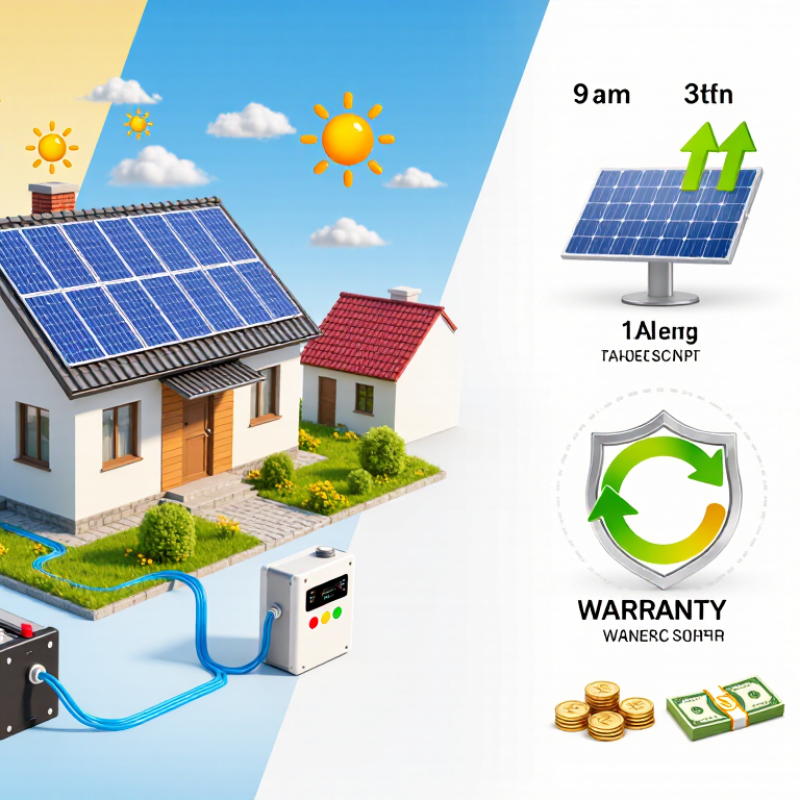
Fatih Birol, Executive Director of the International Energy Agency, said, “Solar is the new king of electricity.” His observation reflects solar energy’s rapid growth, but it does not make every system suitable for every home. A reliable choice requires practical evaluation. Review your last twelve months of electricity bills. Check the roof after 9 a.m., noon, and 3 p.m. Look for chimneys, trees, and nearby buildings that create shadows. Then compare panel efficiency, inverter quality, battery capacity, warranty terms, and installer experience.
Do not ignore maintenance.
A professional installer should explain expected annual production in kilowatt-hours. They should also describe degradation rates and emergency support. Battery storage can improve resilience, yet it increases upfront cost and may not suit every household. This is where many buying guides oversimplify the decision. I have seen homeowners focus on panel count while overlooking inverter replacement costs. That mistake can affect savings years later. The best solar power system balances performance, safety, lifespan, and financial realism. It may not be the cheapest option. It should be the clearest one.
Define Your Home’s Energy Needs and Solar Goals
Choosing a solar power system starts with your household, not your roof. List twelve months of electricity bills, then note seasonal changes. A home using 900 kWh in July needs a different design from one using 500 kWh year-round. The U.S. Energy Information Administration reported average residential electricity use of about 10,791 kWh in 2022. Your home may differ sharply. Heating, cooling, and occupancy matter.
Watch your daily pattern. Solar panels produce most power around midday, while many households use more electricity after sunset. Record when air conditioning, water heating, cooking, and laundry operate. This helps separate two goals: reducing annual bills or maintaining essential loads during outages. A battery may support refrigerators, medical equipment, lights, and communications, but it should not automatically power every appliance. That assumption is expensive.
Think ahead. An electric vehicle, heat pump, or growing family can change demand within a few years. The National Renewable Energy Laboratory’s Electrification Futures Study found that building electrification can substantially increase household electricity consumption. Ask an installer to model these future loads, roof direction, shading, local weather, and export rules. NREL’s PVWatts guidance also shows why production estimates depend on location and system losses. Estimates remain imperfect. Leave room for review. A practical plan might begin with measured usage, a critical-load list, and one conservative production scenario.
How to Choose the Right Solar Power System?
Define your home’s energy needs and solar goals by identifying which household systems consume the most electricity each year.
This illustrative planning profile represents approximately 13,000 kWh of annual household electricity use. Heating and cooling, water heating, and other general loads typically account for the largest shares. Review your utility bills and decide whether your solar goal is to reduce costs, offset most annual consumption, or support future loads such as an electric vehicle or heat pump.
Compare Solar System Types and Key Components
Choosing the right solar power system starts with comparing how each type fits your daily energy habits. A grid-tied system sends excess electricity to the utility network. It usually costs less because it needs no large battery bank. However, it may shut down during a blackout for safety reasons. An off-grid system works independently, but it needs batteries, backup generation, and careful energy planning. Hybrid systems combine grid access with battery storage. They offer more flexibility, though their controls and installation costs can be higher.
The main components deserve equal attention. Solar modules produce direct current electricity, while an inverter changes it into usable alternating current. Batteries store energy for evening use or outages. A charge controller protects batteries in many off-grid designs.
Racking must resist local wind and weather conditions. Disconnects, breakers, grounding, and monitoring equipment support safer operation and easier maintenance. An experienced installer should check roof structure, shading, cable routes, local electrical rules, and future energy needs before recommending equipment.
“
I once underestimated winter shading on a small roof. That mistake reduced expected production. Do not trust an attractive estimate without reviewing seasonal sunlight data. Battery capacity should match essential loads, not every appliance automatically. Refrigerators, pumps, and heating equipment can demand short, powerful surges. Ask for measured system assumptions, maintenance requirements, replacement timelines, and protection details. A reliable design also leaves room for realistic behavior, because many households use more electricity after installation.
Assess Your Property’s Sunlight, Roof, and Installation Options
Choosing a solar power system starts with your property, not a panel catalog. Track sunlight across the roof during morning, noon, and late afternoon. A roof that looks bright may lose production to chimneys, trees, or nearby buildings. The National Renewable Energy Laboratory’s Rooftop Solar Technical Potential report estimated 1,118 gigawatts of U.S. rooftop capacity, but usable potential depends on roof shape, orientation, and shading.
Use a professional site survey with a shade analysis and roof inspection. NREL’s PVWatts model shows that local weather, tilt, azimuth, and system losses can materially change annual output. Ask for monthly production estimates, not only a yearly total. That detail exposes weak assumptions. I once saw a promising roof become a poor candidate after winter shadows were measured. Satellite tools can miss this.
Check the roof’s remaining service life before installation. Replacing an old roof later can require removing the array, adding labor and risk. If roof space is limited, compare a ground-mounted array, carport, or battery-supported design. The International Energy Agency’s Renewables 2024 report recorded about 420 gigawatts of global solar additions in 2023, yet global growth does not guarantee strong output at your address. Review structural capacity, electrical upgrades, local permits, fire access, and utility rules with qualified professionals. A smaller system may be wiser when shade, roof repairs, or export limits reduce practical value.
Calculate System Size, Costs, Savings, and Payback
Choosing a solar power system starts with measured consumption, not roof size. Download twelve months of electricity bills and calculate average daily use. Then adjust for seasonal peaks, future appliances, and local sunlight. NREL’s PVWatts tool estimates production using weather data, tilt, orientation, and system losses. A practical design should also allow roughly 10% to 15% uncertainty. Real roofs are rarely perfect.
For example, a home using 24 kWh daily may need about 6 to 8 kW of solar capacity, depending on local peak sun hours. Divide annual consumption by expected annual production per kilowatt. Include inverter losses, shading, and panel degradation. NREL research commonly models degradation near 0.5% per year. Battery capacity requires a separate calculation. Size it for evening loads and outage priorities, not total daily consumption.
Costs should include panels, racking, labor, permitting, monitoring, maintenance, and battery replacement. NREL’s 2024 residential benchmark reported roughly $3 per watt before incentives, although local prices vary considerably. The International Energy Agency’s Renewables 2024 report confirms that solar costs continue falling, but household payback still depends heavily on electricity tariffs and export rules. Calculate annual savings from self-consumption first, then add export credits conservatively. Divide the net installed cost by first-year savings. A five-year payback may look attractive, but tariff changes can extend it. My own planning preference is to test low, expected, and high-production cases. The middle case is not always realistic.
How to Choose the Right Solar Power System? - Calculate System Size, Costs, Savings, and Payback
Illustrative residential comparison using typical U.S. assumptions. Actual results depend on location, roof orientation, shading, utility rates, and installation conditions.
| System Size |
Estimated Annual Solar Generation |
Reference Annual Electricity Use |
Estimated Energy Offset |
Estimated Installed Cost
Before Incentives |
Estimated Annual Bill Savings |
Simple Payback Period |
Estimated 20-Year Gross Savings |
Estimated 20-Year Net Benefit |
Typical Application |
| 3 kW |
4,050 kWh |
10,000 kWh |
40.5% |
$8,400 |
$640 per year |
13.1 years |
$12,798 |
$4,398 |
Small home or low electricity usage |
| 5 kW |
6,750 kWh |
10,000 kWh |
67.5% |
$14,000 |
$1,067 per year |
13.1 years |
$21,340 |
$7,340 |
Average home with moderate electricity use |
| 7 kW |
9,450 kWh |
10,000 kWh |
94.5% |
$19,600 |
$1,493 per year |
13.1 years |
$29,862 |
$10,262 |
Home with high electricity use or electric appliances |
| 10 kW |
13,500 kWh |
10,000 kWh |
100% usage covered
plus excess export |
$28,000 |
$2,045 per year |
13.7 years |
$40,900 |
$12,900 |
Large home, heat pump, electric vehicle, or future load growth |
Calculation assumptions: Annual production is estimated at 1,350 kWh per installed kW, which is a representative planning value for a well-oriented residential system in a sunny-to-moderate solar region.
Cost assumption: Installed cost is estimated at $2.80 per watt before tax credits, rebates, financing charges, roof work, or other site-specific expenses.
Savings assumption: Electricity purchased from the grid is valued at $0.18 per kWh, while exported electricity is valued at $0.07 per kWh. For systems up to 7 kW, 80% of solar generation is assumed to be used on-site. For the 10 kW example, on-site use is capped at 10,000 kWh and the remaining generation is exported.
Payback formula: Estimated installed cost divided by estimated annual bill savings. The calculation excludes maintenance, inverter replacement, financing costs, utility rate changes, degradation, and incentives.
Important: A final system size should be based on at least 12 months of electricity bills, available roof area, shading analysis, local utility export rules, and expected future electricity consumption.
Evaluate Providers, Warranties, Maintenance, and Grid Policies
How to Choose the Right Solar Power System?
Choosing a solar system involves more than comparing panel output and installation prices. Evaluate the provider’s experience with roofs like yours, especially if shading changes during the day. Ask for licenses, insurance, recent customer references, and a clear proposal showing equipment, labor, permits, and expected production. A reliable installer should explain assumptions instead of promising perfect savings. Be cautious with impressive estimates.
Tips: Request everything in writing. Check response times. Ask who handles repairs after installation. Compare workmanship, equipment, and performance warranties separately. A long warranty means little if the provider may not support it later.
Read every warranty clause carefully. Confirm coverage for panels, inverters, mounting hardware, leaks, labor, and removal costs. Some warranties exclude damage caused by storms, poor maintenance, or unauthorized repairs. Ask how performance is measured and what evidence is required for a claim.
Maintenance should include monitoring, inspection, and practical cleaning advice. Solar systems are not completely maintenance-free. Dust, leaves, loose connections, or inverter faults can reduce output quietly. I would also ask about inspection fees and expected service intervals, because these costs are easy to overlook.
Grid policies can change the financial result. Confirm whether your utility allows net metering, export credits, batteries, or system-size limits. Ask who completes interconnection paperwork and what happens during outages. A system may produce power but still shut down when the grid fails. That detail often surprises new owners. Get the current policy directly from the utility, not only from a sales conversation. Then compare the proposal against your actual electricity bills and future needs.