







Global shipping is changing beyond ocean vessels and massive diesel trucks. The final delivery mile now matters more.
A Tiny Electric Truck can move containers, parcels, and supplies between ports, warehouses, and urban customers. Its compact body fits narrow loading lanes and crowded distribution centers. Electric drivetrains also offer quiet operation, instant torque, and zero tailpipe emissions during local delivery. These advantages can reduce noise near homes and improve working conditions for drivers. However, the vehicle is not automatically efficient everywhere.
Sam Abuelsamid, an automotive technology analyst and transportation expert, has often emphasized a practical principle: “Electrification is not a one-size-fits-all solution.” That warning should guide every shipping decision. A small truck may perform well on predictable routes with overnight charging and moderate payloads. It may struggle on steep roads, extreme temperatures, or long rural routes without reliable charging access. Battery weight can also reduce available cargo capacity. Those details can change the business case quickly.
Real-world fleet experience matters more than attractive specifications. Operators should measure daily distance, loading time, payload weight, charging costs, and seasonal performance. A depot with three vehicles may need stronger electrical infrastructure than expected. Maintenance can be simpler, but battery replacement remains a serious long-term expense. The honest answer is not always electric.
Still, when route conditions match the technology, a Tiny Electric Truck can support cleaner, quieter, and more flexible global logistics. Its value comes from fit, not novelty. Careful trials should come before large-scale purchasing.
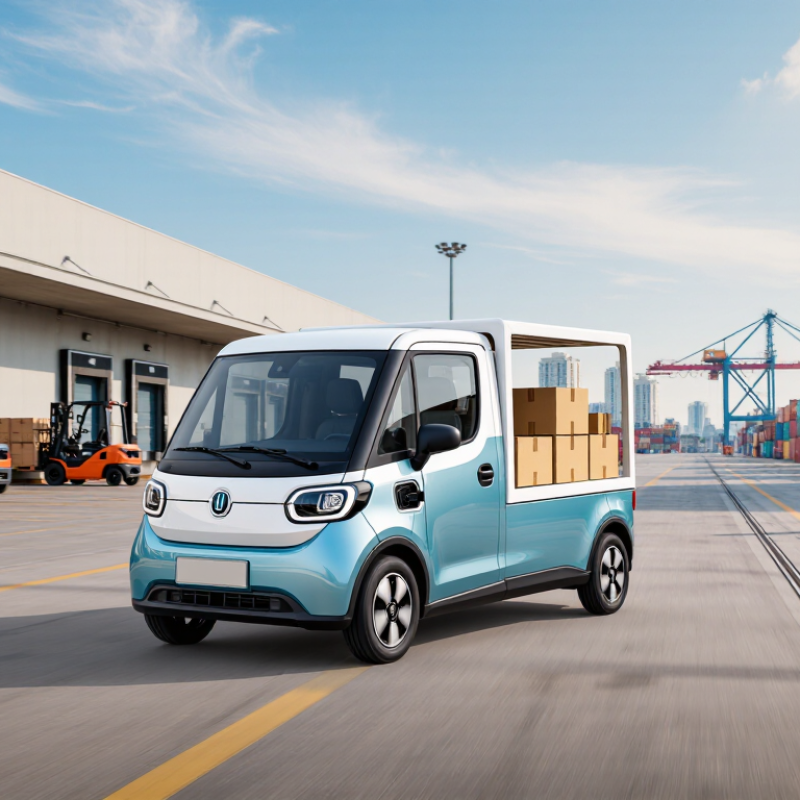
A tiny electric truck is a compact commercial vehicle powered by a battery instead of a combustion engine. “Tiny” has no universal legal definition, so dimensions, payload, and permitted weight vary by market. Many models fit narrow urban lanes, carry several hundred kilograms, and use a simple cab-over layout. A short wheelbase helps the driver turn beside crowded loading bays. The battery usually sits beneath the floor or behind the cabin.
Its practical value is clearest in short shipping cycles. A small truck can move cartons from a local warehouse to a port, rail terminal, or delivery hub without adding tailpipe emissions at street level. The International Energy Agency reported that global electric truck sales grew by about 35% in 2023. The report also identified China as the leading deployment market. These figures show momentum, not universal readiness.
Battery range, charging access, payload, and cold-weather performance still require careful checking. A vehicle that carries 800 kilograms may lose useful range on steep roads or with repeated stops. That detail is easy to miss. Maritime transport carries over 80% of global merchandise trade, according to UNCTAD’s Review of Maritime Transport 2023. Tiny electric trucks cannot replace ocean vessels, but they can support the first and final kilometers around shipping networks. Their small size reduces loading flexibility, too. That is an honest weakness. Range estimates also need independent route testing, not only laboratory figures.
A tiny electric truck can support global shipping by handling the difficult distance between hubs and customers. It fits narrow streets, crowded terminals, and compact warehouse yards. That flexibility matters when containers arrive near busy city districts. A small vehicle can move cartons from a local depot to a retail store or delivery partner. It also produces less noise during early morning loading.
Daily operations depend on careful planning. Managers can schedule charging during warehouse downtime and track battery levels through fleet software. A typical route may include a port gate, a sorting center, and several commercial stops. Regenerative braking can help on hilly streets, but heavy loads still reduce driving range. Payload limits must match the shipment, not the driver’s optimism. Small details matter. Tire pressure, cold weather, and repeated stop-and-go traffic can change the route plan.
The truck also supports cleaner documentation and safer handling. Digital records can connect vehicle trips with shipment numbers, delivery times, and inspection checks. This improves visibility across international logistics teams, while local rules still govern road access, charging, and vehicle weight. It is not a complete replacement for large freight vehicles. Long routes, oversized cargo, and weak charging networks remain practical weaknesses. A cautious operator should test one route, measure energy use, and revise the plan before expanding. Mistakes are possible, especially when traffic patterns change without warning.
| Operational Dimension | How a Tiny Electric Truck Helps | Practical Data or Planning Check | Global Shipping Consideration |
|---|---|---|---|
| Port and warehouse transfers | Moves small consignments, documents, tools, and time-sensitive parts between nearby facilities without dispatching a larger vehicle. | Compare the vehicle’s rated payload and cargo volume with the actual shipment, packaging, driver, and equipment weight. | Confirm that the route, loading area, and terminal rules permit the vehicle’s dimensions and operating class. |
| Last-mile delivery | Supports deliveries from a local depot, urban consolidation centre, or port-area warehouse to nearby customers. | Plan the route using loaded range, traffic, terrain, temperature, and the energy needed for return travel. | Low-emission-zone rules, vehicle registration, and commercial access restrictions differ by city and country. |
| Shipment size and load limits | Works best for compact, lighter loads rather than replacing heavy trucks used for container or bulk transport. | Use the vehicle manufacturer’s rated payload, gross vehicle weight, axle limits, and cargo-space measurements; do not estimate from appearance. | Road-weight limits and vehicle classifications vary by jurisdiction. Cargo must also be secured in accordance with local requirements. |
| Container and freight handling | Can handle local pickup or delivery of selected packages and components associated with containerised freight. | A standard 20-foot ISO freight container is approximately 6.06 m long externally; a tiny truck is not a substitute for a container tractor or terminal handling equipment. | Container dimensions, maximum gross mass, and permissible road loads should be verified against the container plate and applicable transport rules. |
| Charging and daily scheduling | May be recharged during planned depot time, helping coordinate local work with warehouse operating hours. | Check the vehicle’s charging connector, supported charging power, battery capacity, and charging time in its technical documentation. | Connector types, electrical supply, charging infrastructure, and grid conditions differ across markets. Confirm compatibility before deployment. |
| Energy use and emissions | Electric drive produces no tailpipe exhaust while operating, which can be useful in indoor or densely populated delivery areas where permitted. | Compare energy consumption per kilometre using the same route, payload, speed, and operating conditions. | Lifecycle emissions depend on electricity generation, vehicle manufacture, battery production, and end-of-life treatment. |
| Fleet coordination | Can be assigned to repeatable short routes while larger vehicles carry freight over longer distances. | Track payload utilisation, route distance, charging downtime, delivery completion, and maintenance availability. | Telematics, data connectivity, software, and reporting requirements may differ between countries and operators. |
| Customs and cross-border movement | Supports local logistics around a border facility or port but does not remove customs or freight-document requirements. | Prepare the shipment’s commercial invoice, packing list, transport documents, and any required permits according to the route. | Customs declarations, duties, vehicle homologation, insurance, and cross-border operating permissions depend on the countries involved. |
| Total operating cost | May reduce energy and routine service costs on suitable routes, while requiring investment in vehicles, charging, and fleet processes. | Compare purchase or lease cost, electricity, charging equipment, insurance, maintenance, downtime, and resale value over the planned service life. | Electricity prices, incentives, taxes, parts availability, and servicing costs vary by market; use local quotations for a reliable comparison. |
| Best-fit use case | Short, predictable, lower-payload trips between nearby logistics sites or for urban distribution. | Confirm that daily distance, payload, cargo dimensions, charging access, and duty cycle match the selected vehicle’s specifications. | For long-haul transport, heavy freight, or routes without dependable charging, a different vehicle class or transport mode may be more suitable. |
A tiny electric truck earns its place when cargo is compact, frequent, and time-sensitive. In daily route planning, I would match its capacity to parcels, bakery trays, pharmacy supplies, fresh produce, and maintenance tools. Its narrow body can enter older streets and loading areas where larger vans lose time. That access matters more than headline payload figures. Small footprint, useful advantage. A practical operator should measure cargo volume, weight, and loading frequency before choosing this vehicle. A truck carrying 600 kilograms may still fail when boxes fill its limited floor space.
The best tasks are neighborhood deliveries, campus services, hotel supply runs, and last-mile transfers from a warehouse. It can handle several stops with modest loads, especially when routes stay predictable and charging points are nearby. Covered cargo protection helps during light rain, but insulation may be needed for temperature-sensitive goods. Drivers should secure every box against shifting. I have seen small loads become awkward when shelves are poorly arranged. Capacity is not only a number. It includes usable space, axle limits, passenger requirements, and energy consumed by hills, traffic, and cold weather.
This vehicle is less suitable for construction materials, bulky furniture, long-distance freight, or irregular emergency loads. Range estimates can disappoint when the truck carries maximum weight. Test the route in real conditions. Record charge time, loading time, and failed delivery attempts. Those records reveal whether the vehicle saves labor or simply moves the problem elsewhere. A careful buyer should leave room for seasonal demand, because a route that fits in spring may not fit before a holiday. Small, efficient, yes. Universally capable, no.
A tiny electric truck can lower delivery costs when routes are short, predictable, and heavily loaded. That sounds simple. The International Energy Agency reported nearly 54,000 electric truck sales worldwide in 2023, showing stronger commercial interest. Energy costs can also fall sharply. For example, a vehicle using 25 kWh per 100 kilometers costs about $3.75 at $0.15 per kWh. A diesel vehicle using 12 liters per 100 kilometers could cost $18 at $1.50 per liter. Local prices vary.
BloombergNEF reported that global battery pack prices fell to $115 per kWh in 2024. This may gradually reduce purchase costs. Electric drivetrains also need fewer oil changes and moving parts. That matters for repeated port-to-warehouse routes.
Less noise helps during early deliveries. Drivers may notice smoother acceleration and easier low-speed control.
The environmental case depends on the electricity source. The International Council on Clean Transportation found that battery-electric trucks can produce roughly two-thirds fewer lifecycle emissions than diesel trucks in Europe. However, a coal-heavy grid weakens that advantage. Cold weather, payload limits, and charging delays remain real concerns. The arithmetic is persuasive, but incomplete. A tiny truck is not ideal for every global route. Fleet managers should compare route logs, charger access, battery degradation, and local electricity prices before ordering vehicles. Mistakes happen when purchase price receives more attention than daily utilization.
A tiny electric truck can simplify short-distance global deliveries, but its small size creates strict trade-offs. Buyers should verify payload capacity, cargo volume, ground clearance, and battery range under real conditions. Cold weather, hills, heavy loads, and repeated stops can reduce driving distance. A truck rated for 300 kilometers may deliver much less in daily service. That difference matters.
Regulations can be more difficult than the vehicle itself. Importers should check local rules for vehicle classification, road approval, lighting, braking, dimensions, and maximum weight. Battery transport also requires correct labeling, certified packaging, and carrier approval. Customs offices may request invoices, technical files, origin documents, and battery safety records. Requirements differ by destination and can change without warning. Professional inspection before shipment is sensible, though it adds time and cost. I have seen planning fail because buyers checked the truck, but not the port requirements.
Tips: Ask the seller for test data under loaded conditions. Confirm charging plug compatibility and local electrical standards. Measure the container, loading ramp, and warehouse doors. Budget for duties, storage, insurance, inspection, and possible modifications. Keep every document consistent. A small mismatch in vehicle weight or battery information can delay clearance. Also, do not assume a low-speed classification permits unrestricted road use. Local authorities may require registration, special routes, or operator training. When uncertain, obtain written guidance from customs officials and an independent compliance specialist.
ISO container dimensions highlight the size constraints buyers should verify before international shipment.
The chart uses nominal internal dimensions for widely used ISO dry containers. A tiny electric truck should remain below the container’s internal width and height after allowing clearance for mirrors, packaging, loading equipment, and tie-downs. Buyers must also confirm destination-market vehicle homologation, road-speed and weight rules, battery transport classification under UN 3480 or UN 3481, and the applicable sea, air, and port-handling requirements.
No, I will think about it in future.


