







Selecting a reliable Pu Insulation Foam System supplier requires more than comparing prices or product brochures. Performance depends on foam chemistry, dispensing equipment, substrate conditions, climate, and installer training. A system that performs well in a cold warehouse may behave differently on a humid construction site. This guide examines leading suppliers worldwide through practical and technical criteria. It considers thermal conductivity, dimensional stability, adhesion, curing behavior, and production consistency. It also reviews technical documentation, quality testing, customer support, and regional availability.
Real project experience matters.
Trusted suppliers should provide clear technical data sheets, safety information, application guidance, and batch traceability. Independent test reports can support claims about insulation performance, fire behavior, moisture resistance, and long-term durability. However, test results may not fully represent field conditions. Installation quality remains critical. A minor mixing imbalance can create weak cells, uneven expansion, or visible surface defects. Reliable manufacturers usually offer equipment calibration advice, sample trials, and responsive troubleshooting. They may also help customers select suitable formulations for panels, pipes, roofs, cold storage, or industrial equipment.
No supplier is perfect.
Market rankings can change as factories expand, certifications expire, or service networks improve. Some published claims are difficult to compare directly. That limitation deserves attention. This overview therefore emphasizes verifiable evidence, transparent communication, and practical value instead of promotional language. Buyers should confirm current specifications, applicable standards, delivery capabilities, and local requirements before making a final decision. The strongest supplier is not always the largest one. It is often the partner that understands the application, supports the installer, and delivers consistent results over time.
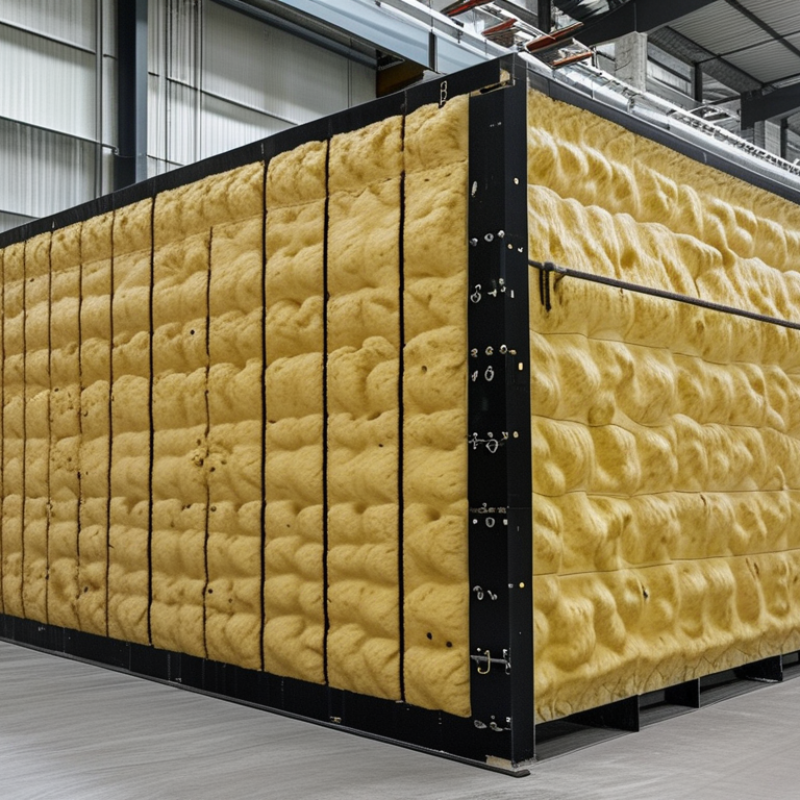
PU insulation foam systems are engineered solutions that use polyurethane to reduce heat transfer through walls, roofs, floors, pipes, and equipment. Most systems combine two liquid components that react and expand after mixing. The foam fills gaps, bonds to many substrates, and forms a continuous insulation layer.
Its role extends beyond thermal resistance. Closed-cell foam can limit air leakage and moisture movement, while open-cell foam provides a lighter, more flexible structure. The correct choice depends on climate, building design, substrate condition, and required performance. A professional installer checks surface dryness, temperature, mixing pressure, and foam thickness. Small errors matter. Uneven application can leave cold spots behind finished panels.
Experienced suppliers usually provide technical data, application guidance, batch information, and testing documentation. These details help contractors compare density, thermal conductivity, dimensional stability, and fire performance. Reliable systems also require proper ventilation and protective equipment during installation. Local building requirements still control the final application.
Performance is not permanent by default. Direct sunlight, water exposure, movement, and poor surface preparation can reduce service life. Foam should be protected with suitable coatings, membranes, or building layers when required. It is not a magic layer. Site inspections and thickness checks often reveal problems that photographs miss. A careful supplier supports these checks instead of treating the product as the whole solution.
PU insulation foam systems are increasingly judged by performance, not only by supplier scale. The UNEP GlobalABC 2023 report states that buildings consumed 34% of global energy in 2022. They also produced 37% of energy and process-related carbon emissions. Better envelopes can reduce heating and cooling demand. However, foam selection needs more than a low laboratory thermal conductivity figure.
Rigid polyurethane boards and insulated panels suit roofs, walls, cold rooms, and floors. Spray polyurethane foam fills irregular cavities, while open-cell grades provide lighter acoustic coverage. Closed-cell foam offers higher moisture resistance and strength. In factory production, pour-in-place systems bond firmly around pipes and equipment. Some formulations use water-blown chemistry, pentane, or lower-global-warming-potential HFO blowing agents. Selection should consider local ventilation requirements and environmental regulations.
EN 13165 and ASTM C1029 provide useful reference points for rigid and spray-applied products. Key checks include declared lambda value, dimensional stability, adhesion, density, fire performance, and aging resistance. The IEA reports that building energy efficiency improvements remain essential for reducing energy demand, yet installation quality often limits real results. A clean, dry substrate matters. So does correct mixing temperature. Small site errors can create visible gaps behind wall panels.
A supplier should provide tested system data, application training, and traceable batch information. I would not rely on brochure values alone. Real buildings age differently. This remains an uncomfortable weakness in many comparisons.
Top PU Insulation Foam System Suppliers Worldwide
How to Evaluate Global PU Insulation Foam Suppliers
A capable PU insulation foam supplier should provide more than attractive product sheets. Request recent technical data, including density, thermal conductivity, closed-cell content, curing time, and dimensional stability. Check whether test methods are clearly stated. Vague numbers deserve questions.
Ask for production samples from different batches. Compare cream time, rise profile, adhesion, and surface finish under your actual temperature conditions. A supplier with practical experience should explain how humidity and substrate temperature affect results. Test reports matter, but application support matters too. Small details often decide whether a system performs reliably on site.
Review traceability, quality controls, packaging strength, and delivery records. Confirm that the supplier can support your destination with suitable documentation and compliant materials. Independent certifications can strengthen confidence, but they should match the exact product and factory. A certificate for another formulation proves little.
Price alone is a weak filter. Calculate waste, storage needs, equipment adjustments, and rejected panels. I would also ask for customer references with similar climates and production volumes. One evaluation mistake is trusting polished presentations too quickly. A quiet factory audit may reveal more than a long sales call. Even experienced buyers can overlook after-sales response time. Measure it before signing.
| Evaluation Dimension | Global Supplier Benchmark | What to Verify | Evaluation Weight | Assessment Result |
|---|---|---|---|---|
| Geographic Coverage | Suppliers serving at least two major regions, such as Europe, North America, Asia-Pacific, the Middle East, or Latin America. | Local technical support, export documentation, regional warehousing, and delivery lead times. | 10% | High priority |
| System Type | Two-component rigid PU or PIR systems supplied as Polyol And Isocyanate components. | Mix ratio, machine compatibility, application method, density range, and recommended substrate conditions. | 10% | Mandatory |
| Thermal Conductivity | Rigid PU and PIR insulation commonly provide declared thermal conductivity values in the approximate range of 0.020–0.030 W/m·K, depending on formulation, density, aging, and test method. | Independent test reports, declared value, aged value, specimen thickness, temperature, and applicable standard. | 15% | Compare by test method |
| Density Control | Typical rigid spray or panel foam systems are formulated across different density ranges; many building applications use approximately 30–60 kg/m³, subject to design requirements. | Density tolerance, dimensional stability, core density, compressive strength, and batch-to-batch consistency. | 10% | Check production data |
| Fire Performance | Performance varies significantly by formulation, facing, thickness, installation, and assembly. PIR systems may provide improved fire performance compared with standard PU, but no generic rating applies to every system. | Reaction-to-fire classification, full assembly test, smoke production, flame spread, and local code approval. | 15% | Project-specific |
| Blowing-Agent Profile | Available systems may use water, hydrofluoroolefin, or other approved blowing-agent technologies, depending on region and application. | Global-warming potential, regulatory status, safety data sheet, handling requirements, and regional availability. | 10% | Sustainability critical |
| Standards and Certifications | Relevant evaluation may include EN 13165 for factory-made rigid PU/PIR products, EN 14315 for in-situ sprayed PU systems, and ASTM C1029 for spray-applied cellular PU insulation. | Valid certificates, scope of certification, product model, test laboratory, expiration date, and market applicability. | 15% | Non-negotiable |
| Mechanical Performance | Rigid insulation performance is normally assessed through compressive strength, tensile strength, adhesion, water absorption, and dimensional stability. | Values at the intended density and thickness, especially for roofs, floors, cold storage, and load-bearing applications. | 10% | Application dependent |
| Quality and Batch Traceability | Reliable manufacturers maintain controlled raw-material specifications, batch records, production testing, and documented corrective-action procedures. | Quality-management certification, certificate of analysis, batch number, shelf life, storage conditions, and complaint response time. | 10% | Audit recommended |
| Technical Service | Strong suppliers provide installation guidance, equipment calibration support, operator training, troubleshooting, and project-specific formulation assistance. | Response time, language coverage, local service personnel, application manuals, and on-site commissioning capability. | 10% | High-value differentiator |
| Commercial Reliability | Competitive suppliers offer transparent pricing, realistic minimum order quantities, stable lead times, and clear warranty terms. | Delivered cost, payment terms, minimum order quantity, production capacity, contingency stock, warranty exclusions, and contract flexibility. | 5% | Validate commercially |
Top PU Insulation Foam System Suppliers Worldwide
Leading Supplier Categories and Regional Market Coverage
The global PU insulation foam market includes system houses, chemical formulators, equipment integrators, and regional distributors. Each category serves a different purchasing need. System houses develop polyol blends, catalysts, surfactants, and blowing-agent packages for controlled production. Equipment integrators connect these systems with metering units, mixing heads, and spray equipment. Distributors often provide faster local delivery and technical support for smaller manufacturers.
Regional coverage affects more than shipping time. Suppliers in North America commonly support cold-chain panels, commercial roofing, and building envelope applications. European suppliers often emphasize low-emission formulations, energy efficiency, and detailed product documentation. Asia-Pacific offers broad manufacturing capacity, especially for appliances, refrigerated transport, and construction panels. Middle Eastern and African markets may prioritize heat resistance, jobsite training, and dependable storage conditions. Latin American buyers often value flexible order volumes and nearby service teams.
Experienced buyers should compare density control, curing behavior, adhesion, thermal conductivity, and fire-performance documentation. Ask for batch traceability and practical installation guidance. Data beats claims. Fit matters.
A reliable supplier should explain how humidity, substrate temperature, and machine settings affect foam quality. Poor support can turn a good formulation into costly rework. Regional warehouses reduce delays, but they do not guarantee technical competence. That distinction is easy to miss. Some supplier comparisons also overlook technician training and spare-part availability. This remains a weakness in many procurement reviews. Local trials, documented test results, and transparent communication provide stronger evidence than a polished catalog.
Selecting PU insulation foam system suppliers requires more than comparing price per kilogram. The UNEP Global Status Report for Buildings and Construction 2022 found that buildings consumed about 34% of global energy and produced nearly 37% of energy-related emissions. That pressure makes thermal performance, blowing-agent impact, and installation yield important purchasing metrics. Request technical data sheets, safety data sheets, batch records, declared density, thermal conductivity, and fire-test evidence before approval. A cheaper system may create more waste.
Compliance must be checked before materials reach the site. Confirm alignment with local chemical registration rules, worker-protection requirements, fire classifications, and waste procedures. For products using fluorinated blowing agents, assess the European Union F-gas Regulation 2024/573 where relevant. The regulation strengthens controls on high-global-warming-potential gases. Supplier documentation should identify chemical composition, exposure controls, storage limits, and emergency response steps. Missing paperwork is a warning.
Application conditions can change results quickly. Substrate moisture, surface temperature, mixing ratio, spray distance, and ventilation affect adhesion and cell structure. The International Energy Agency reports that buildings remain a major source of global energy demand, so small installation defects can undermine long-term savings. Request field trials on the actual substrate, not only laboratory panels. Measure yield, cured density, dimensional stability, and surface defects. One practical weakness remains: procurement teams often accept catalogue values without checking site performance. That habit deserves review.
Typical polyurethane insulation foam density ranges vary by application. Open-cell spray foam is generally selected for air sealing and sound control, while higher-density closed-cell systems, rigid boards, pipe insulation, and refrigerated panels provide greater structural strength and moisture resistance. During purchasing, confirm the supplier’s technical data, blowing-agent requirements, fire classification, dimensional stability, and compliance with the standards applicable in the target market.
No, I will think about it in future.


