Top Tips for Choosing the Right EV Charger Car for You?
Choosing the right Ev Charger Car can feel overwhelming. With numerous options available, it’s crucial to make informed decisions. Expert Anna Green, a pioneer in sustainable vehicle technology, once said, "Finding the right charger is as vital as choosing the car itself." Her insight emphasizes the importance of matching your EV with the right charger for efficiency.
When selecting an EV Charger Car, consider your daily needs. Do you have a short commute or longer trips? The charging speed matters. For instance, a Level 2 charger is a common choice for home use, while DC fast chargers are better for quick top-ups on the go. Remember, not all chargers suit all vehicles. Compatibility is key.
However, things can get tricky. Some users face compatibility issues or have to deal with installation hurdles. It's essential to research local hardware and available options before committing. Keep in mind, what works for one person may not work for another. Assess your lifestyle, charging habits, and budget appropriately.
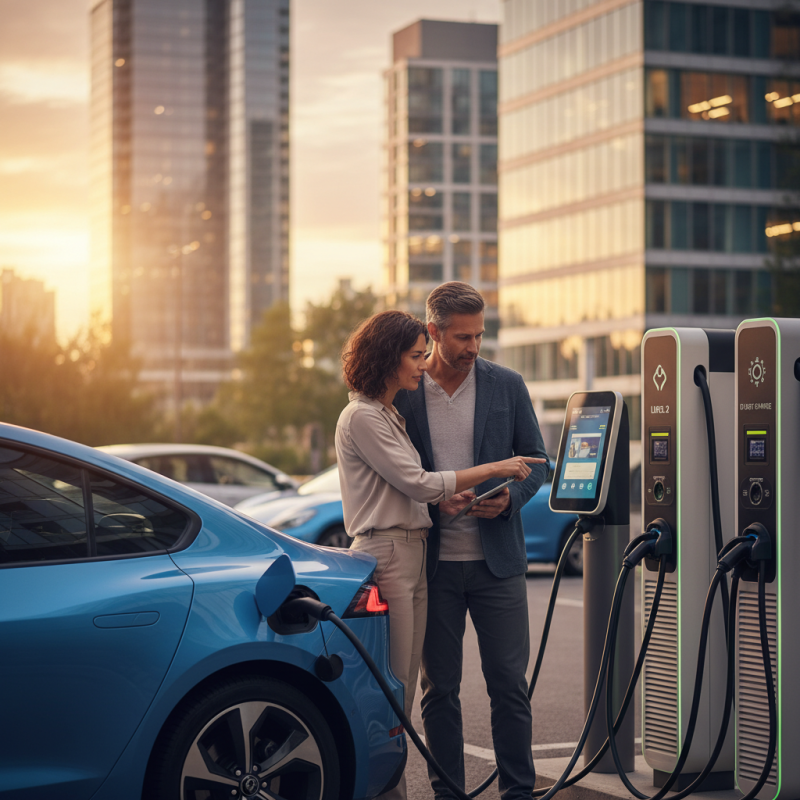
Understanding the Different Types of EV Chargers Available on the Market
When choosing an EV charger, understanding the types available is critical. There are three main types of EV chargers: Level 1, Level 2, and DC fast chargers. Level 1 chargers are the slowest, typically taking 8-12 hours for a full charge using a standard outlet. Level 2 chargers speed up the process, often charging a vehicle in 4-6 hours. DC fast chargers are the quickest, providing up to 80% charge in 30 minutes. According to a recent industry report, nearly 60% of EV users prefer Level 2 chargers for home use due to their balance of speed and cost.
Consider these tips when choosing. Think about your daily driving range. If you commute less than 30 miles, a Level 1 charger may suffice. However, if your daily needs exceed that, a Level 2 charger is a wise investment. You might want to install a Level 2 at home, especially if you have off-street parking. Additionally, consider the location of your charger. Accessibility is key.
The placement and type of charger could impact charging efficiency. Be cautious about installation costs which can vary widely. Data shows installation can range from $500 to $2,000, depending on your home's electrical system. This makes planning essential. Reflect on your future driving habits too. Market research indicates that EV adoption is set to rise, meaning you might need more charging capacity later.
Assessing Your Charging Needs Based on Vehicle Type and Daily Usage
When selecting an electric vehicle (EV) charger, it’s crucial to evaluate your charging needs. The type of vehicle you drive plays a significant role. For instance, a compact electric car typically requires a lower power output compared to larger models like SUVs. According to industry reports, most standard home chargers range from 3.3 kW to 22 kW. Understanding your vehicle's specifications can help you make an informed decision.
Daily usage is another key factor. If your commute is less than 30 miles, a Level 2 charger with 240 volts might suffice. A report by the Department of Energy emphasizes that 80% of EV charging happens at home. For those with longer travel distances, considering a more powerful charger can reduce your waiting time.
It’s worth noting that not all installations are straightforward. Home electrical systems may need upgrades to support higher-output chargers. An older home may have limitations that impact performance. This could lead to unexpected costs. Assessing your current electrical infrastructure is vital. Without this evaluation, you might face inefficiencies that affect your EV experience.
Evaluating Charger Installation Requirements for Home and Public Locations
When choosing an EV charger, installation requirements are key. Identify your power source at home. Most garages have a standard outlet, but some may require upgrades. Consider your home's electrical capacity. A circuit may need enhancement to handle the charger. Check local codes; they can be tricky. Regulations differ greatly by region.
Public charging locations vary significantly. Some are free, while others charge fees. Look for chargers that match your car’s specifications. Compatibility is vital. Note the installation process, which might affect accessibility. Parking lots may have designated areas and signs. Ensure you understand these nuances. This can make a big difference in your charging experience.
Think about future needs as well. Will you expand your electric vehicle usage? You might want a faster setup down the line. Check if the charger has upgrade options. Installation can be complex, so don’t hesitate to contact professionals. Sometimes, the process takes longer than expected. Be prepared for challenges; they are part of the journey.
Top Tips for Choosing the Right EV Charger Car for You
| Charger Type | Power Output (kW) | Installation Location | Charging Time (hours) | Cost (USD) |
| Level 1 | 1.4 - 1.9 | Home | 8-20 | 300-600 |
| Level 2 | 3.3 - 19.2 | Home/Public | 4-8 | 500-1,500 |
| DC Fast Charging | 50 - 350 | Public | 0.5-1 | 10,000-40,000 |
| Wireless Charging | 7.7 - 22 | Home/Public (Limited) | 2-8 | 3,000-6,000 |
Comparing Charging Speeds and Their Impact on Convenience and Costs
When considering an EV charger, charging speeds significantly influence convenience and cost factors. There are generally three levels of charging: Level 1, Level 2, and DC Fast Charging. Level 1 chargers, often using standard household outlets, can take up to 24 hours to fully charge an EV. This is impractical for many users, especially in a fast-paced world. Research indicates that around 80% of EV owners prefer quicker charging options.
Level 2 chargers enhance the experience by reducing charging time to about 4-8 hours, depending on the vehicle. These chargers are commonly installed in homes and public charging stations. According to industry reports, a Level 2 charging station can cost between $500 to $2,500. The upfront investment may seem high, but it can lead to better long-term savings. Yet, many users overlook the installation costs. These can skyrocket based on electrical infrastructure.
DC Fast Charging takes convenience to another level, providing an 80% charge in about 30 minutes. However, the infrastructure is still developing, and access may be limited in certain regions. The cost of using these stations can also vary widely. Therefore, individuals must consider their daily driving habits and charging needs carefully. Balancing speed, cost, and availability can be challenging, yet it’s crucial for an optimal EV experience.
Charging Speed Comparison of Electric Vehicle Chargers
This chart compares the charging speeds of different types of electric vehicle chargers. Level 1 chargers provide about 4 miles of range per hour, while Level 2 chargers can offer around 25 miles. DC Fast Charging stations significantly increase convenience, delivering up to 100 miles of range in just one hour.
Budgeting for Your EV Charger: Initial Costs and Long-Term Savings
When budgeting for an EV charger, start by considering initial costs. These can range from a few hundred to several thousand dollars. The price often depends on the charger’s speed and features. Installation costs may also vary significantly. Hiring an electrician adds to the total. Make sure to factor those expenses into your budget.
Think about long-term savings too. EVs typically offer lower fueling costs. Charging at home is often cheaper than using gas. Additionally, many areas provide incentives for electric vehicle owners. These can help offset initial costs over time. However, don’t forget about potential maintenance. While EV chargers are generally low-maintenance, wear and tear can occur.
Overall, understanding both upfront and ongoing costs is crucial. Many people underestimate their energy consumption patterns. This can lead to higher utility bills. It’s essential to monitor your usage closely. Planning well can lead to significant savings in the long run. Reflect on your driving habits as you make your choice.