






How to Choose the Best Solar Panel System for Your Home?

Choosing a solar panel system for home is not simply a matter of buying the highest-rated panels. Your roof angle, shade, electricity usage, local weather, and budget all change the result. A south-facing roof may perform well, while nearby trees can quietly reduce production each afternoon. Your electricity bill matters more than a showroom brochure.

The International Energy Agency reported in Renewables 2024 that global solar photovoltaic additions reached nearly 420 gigawatts in 2023. That rapid growth shows strong industry momentum, but it does not guarantee savings for every household. IRENA’s Renewable Power Generation Costs in 2023 also confirms that solar costs remain competitive, although financing, installation, and grid fees still vary widely. As IEA Executive Director Fatih Birol stated, “Solar PV is the new king of electricity markets worldwide.” That authority reflects market growth, not a promise of instant household payback.

A reliable decision begins with measured evidence. Review twelve months of electricity bills. Request a professional roof and shade assessment. Compare system size, inverter warranties, battery performance, maintenance terms, and installer credentials. Ask for expected annual output, not only the panel’s peak rating. Small details matter. A dusty panel. A shaded corner. An undersized inverter.

Some estimates will be imperfect. Mine may be too. Household consumption can change after installation, especially with electric vehicles or heat pumps. Therefore, the best solar panel system for home is the one matched to your actual energy profile, roof conditions, and long-term plans. Careful comparison beats impressive promises.
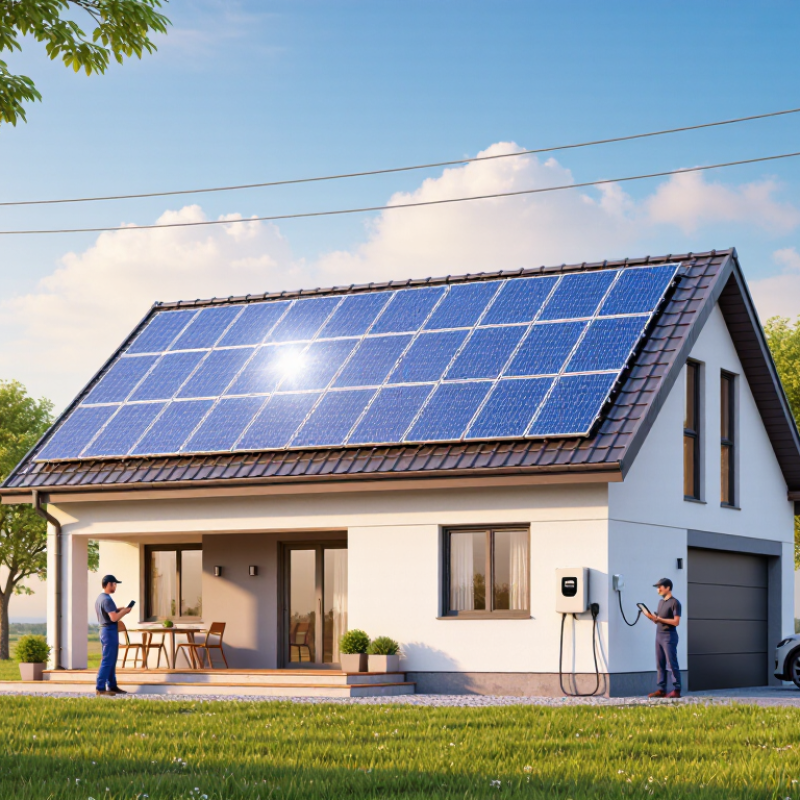
How to Choose the Best Solar Panel System for Your Home?

Solar Panel System Basics for Residential Use

How to Choose the Best Solar Panel System for Your Home?

Solar Panel System Basics for Residential Use

A home solar system usually includes panels, an inverter, mounting hardware, and monitoring equipment. The roof is only one part of the decision. Shade, roof direction, local weather, and household electricity use matter more than panel count alone. The International Energy Agency reported that solar photovoltaic capacity expanded by nearly 420 gigawatts worldwide in 2023. This growth shows strong industry confidence, but household results still vary widely.

Start with twelve months of electricity bills. Look for seasonal peaks, not just annual totals. The U.S. National Renewable Energy Laboratory recommends tools such as PVWatts for estimating production from location, tilt, azimuth, and system losses. Battery storage may improve evening use, but it adds cost, weight, and maintenance considerations. A perfect design does not exist. Roof repairs can also change the calculation later.

Tips: Ask for a shade study and a written production estimate. Compare expected annual kilowatt-hours, not panel wattage alone. Check equipment warranties, installer qualifications, grid-connection rules, and local incentives. Leave space around roof vents and access paths. I would also request a second proposal; online estimates can look precise while hiding important assumptions. The IEA’s Renewables 2024 report notes that policy, financing, and grid access strongly influence solar deployment. Those same factors can shape your payback period.

Assessing Your Home’s Solar Energy Potential

Assessing your home’s solar energy potential starts with the roof, not the equipment. Check its direction, pitch, usable area, and structural condition. In the northern hemisphere, south-facing surfaces often receive strong sunlight, but east- and west-facing roofs can also perform well. Measure shade during morning, midday, and late afternoon. A tall tree may cast a narrow shadow in winter, when sunlight is already limited.

Use twelve months of electricity bills to estimate your household’s annual consumption. Look for seasonal changes, especially from air conditioning, heating, or electric vehicles. Then compare your roof’s sunlight exposure with local solar radiation data from a government or scientific source. A certified solar professional should confirm these figures through an on-site survey. They can inspect roof age, wiring, meter capacity, and local connection requirements. Do not rely only on an online calculator.

Small details matter. Vent pipes, skylights, chimneys, and nearby buildings can reduce the number of useful panels. A battery may improve evening energy use, but its value depends on tariffs, outages, and your daily habits. An older roof may need repairs before installation. That cost is easy to overlook. Even a careful estimate can be wrong if trees grow quickly or utility rules change. Ask for written production assumptions, shading measurements, maintenance expectations, and safety documentation. Compare realistic output, not just the system’s advertised capacity.

How to Choose the Best Solar Panel System for Your Home? — Assessing Your Home’s Solar Energy Potential

Use the following screening factors to estimate whether your home is suitable for solar and to identify the information needed for a professional system design.

Assessment Dimension What to Check Useful Reference Range or Standard Why It Matters Recommended Action
Annual Electricity Consumption Review the last 12 months of electricity bills and record total annual usage in kilowatt-hours. Typical household screening range: 6,000–15,000 kWh per year Electricity consumption determines the approximate solar capacity required to offset part or all of your annual demand. Use actual annual usage rather than a single monthly bill. Include planned loads such as an electric vehicle, heat pump, or electric water heater.
Available Roof Area Measure usable roof sections after excluding chimneys, vents, skylights, roof edges, access paths, and required setbacks. About 5–7 m² of usable roof area per 1 kW of modern photovoltaic capacity Limited roof space may prevent installation of enough capacity to meet the household’s annual electricity needs. Prioritize large, unobstructed roof planes and ask for a layout that includes maintenance access and local fire-safety clearances.
Roof Orientation Identify the direction each roof plane faces and note whether the roof is suitable for the local hemisphere. South-facing roofs are generally favorable in the Northern Hemisphere; north-facing roofs are generally favorable in the Southern Hemisphere Orientation affects the amount and timing of sunlight received by the panels. Do not reject east- or west-facing roofs automatically. They can still produce useful energy, although annual output may differ from the best-facing orientation.
Roof Tilt or Pitch Estimate the roof angle using building plans, a digital level, or an installer’s site survey. Fixed-panel systems commonly perform well across approximately 15°–40° of tilt, depending on location Panel tilt influences sunlight incidence, rain cleaning, snow shedding, and annual energy production. Roof-mounted panels usually follow the existing roof pitch. Avoid major structural changes solely to achieve a mathematically ideal angle unless the site assessment supports the cost.
Shade Exposure Check shading from trees, neighboring buildings, chimneys, roof structures, and utility equipment during different times of day and seasons. Unshaded conditions are preferred; continuous or recurring shade can materially reduce output Even partial shade on a panel or roof section can reduce energy production, especially when several panels are electrically connected together. Request a shade study covering morning, midday, afternoon, and winter conditions. Consider selective tree trimming only where permitted and practical.
Local Solar Resource Use a reputable solar-resource map or site assessment to estimate sunlight available at the property. A broad planning estimate is about 1,000–1,600 kWh of annual solar electricity per installed kW, before site-specific losses Solar resource varies with latitude, weather, altitude, orientation, tilt, and shading, so the same system size can produce different annual energy in different locations. Use location-specific production modeling. Treat generic production figures as an initial screening tool, not a guaranteed output.
Roof Age and Structural Condition Check roof age, remaining service life, visible damage, moisture intrusion, framing, and load-bearing capacity. Solar equipment is a long-term installation; roof replacement may be more practical before panel installation Removing and reinstalling panels later can add cost and inconvenience if the roof needs replacement soon. Obtain a roof inspection and structural review when the roof is older, damaged, heavily loaded, or constructed with materials requiring special installation methods.
Electrical Service Capacity Review the main service rating, breaker panel condition, available breaker space, grounding, and utility interconnection requirements. Common residential service ratings include 100 A, 125 A, 150 A, and 200 A, but suitability depends on the complete electrical design The existing electrical system must safely accommodate the solar equipment and any future loads. Have a qualified electrical professional confirm whether a new breaker, service upgrade, load calculation, or other electrical work is needed.
Target Solar Offset Decide whether the goal is partial bill reduction, near-full annual energy offset, backup power, or energy-cost protection. A common design target is approximately 50%–100% of annual electricity consumption, subject to local rules and roof limits A larger system is not always the best choice if export compensation, roof space, budget, or utility limits make additional production less valuable. Compare system size, expected annual production, electricity rates, export rules, and future household electricity needs before selecting the target offset.
Battery Storage Requirement Determine whether backup power, evening energy use, outage resilience, or reduced grid imports is a priority. Battery sizing depends on essential loads, desired backup duration, usable capacity, and allowable depth of discharge Solar panels generally produce most energy during daylight, while household demand may continue after sunset or during outages. List essential circuits such as refrigeration, lighting, communications, medical equipment, and heating controls. Size the battery around those loads rather than total household demand unless full-home backup is intended.
Climate and Environmental Conditions Consider high winds, hail, snow, salt air, dust, heat, humidity, and local installation requirements. Environmental design limits must be verified for the specific site and mounting system Weather conditions affect structural design, equipment selection, maintenance, and long-term performance. Ask for documentation showing that the proposed mounting and electrical equipment meet applicable building, fire, wind, snow, and environmental requirements.
Maintenance and Access Evaluate access for inspection, cleaning, vegetation management, inverter servicing, and emergency response. Routine maintenance is generally limited, but periodic inspection and removal of obstructions remain important Dirt, leaves, snow, animal activity, or new shading can reduce performance and make troubleshooting more difficult. Keep access paths clear, monitor system production, and investigate persistent output reductions instead of relying only on visual inspection.
Permits and Utility Interconnection Confirm local planning, building, electrical, fire, and utility approval requirements before installation. Requirements vary by jurisdiction, system size, export arrangement, and building type A system may not be legally energized or connected to the grid without the required approvals and inspections. Verify the approval process early and include permit, inspection, interconnection, and possible grid-upgrade costs in the project budget.
Financial Evaluation Compare installed cost, expected bill savings, financing charges, maintenance, incentives, export credits, and energy-price assumptions. Use a project-specific estimate; payback varies widely by location, system cost, electricity rates, incentives, and production The lowest purchase price may not provide the best long-term value if the design has lower production, limited support, or unsuitable equipment. Request a written proposal showing system capacity, estimated annual production, assumptions, exclusions, warranty terms, and sensitivity to electricity-price changes.
Planning note: These figures are general screening references, not a site-specific engineering assessment. Final system size and expected production should be confirmed through a qualified roof, structural, electrical, shading, and solar-resource evaluation.

Comparing Solar Panel Types and System Components

How to Choose the Best Solar Panel System for Your Home?

Comparing Solar Panel Types and System Components

Solar panel selection starts with your roof, not a sales brochure. Monocrystalline panels usually provide strong efficiency when roof space is limited. Polycrystalline panels can cost less, but they often need more area for the same output. Thin-film panels are lightweight and flexible, although their efficiency may suit larger surfaces better. Shade changes everything. A chimney shadow at noon can reduce production more than expected, so request an hourly shading assessment.

The inverter deserves equal attention because it changes panel electricity into usable household power. String inverters suit many simple roofs, while microinverters can manage panels separately on roofs with different orientations. Hybrid inverters connect solar production with battery storage, but batteries add cost, weight, and replacement planning. Ask about usable capacity, round-trip efficiency, emergency operation, and safe installation clearances. Do not guess.

Racking, wiring, disconnects, and monitoring equipment also affect reliability. Aluminum mounting rails should match the roof structure and local weather conditions. Cables need protection from water, heat, and physical damage. During a practical site review, check where the inverter will sit; a hot, cramped garage may shorten its service life. I would also compare independent test reports, installer licensing, workmanship coverage, and clear maintenance terms. Some estimates focus on panel wattage while ignoring future repairs. That is an easy mistake. A careful design records your annual electricity use, roof condition, household growth, and realistic winter production before calculating payback.

Calculating Costs, Energy Savings, and Financing Options

Choosing the best solar panel system starts with your household’s actual energy use. Review twelve months of electricity bills, not one unusually high summer bill. Note your roof’s direction, shading, age, and available space. A qualified solar assessor can measure sunlight exposure and estimate annual production more accurately than a basic online calculator.

Compare the complete cost, including panels, an inverter, mounting equipment, labor, permits, and future maintenance. Ask for a written estimate with expected energy output and warranty terms. Then compare projected savings with your current electricity rate. A system may reduce monthly bills, but savings depend on weather, utility rules, household usage, and rate changes. Payback periods can look attractive on paper and still disappoint in practice. I would leave room for that uncertainty.

Tips: Request at least three detailed quotes. Check the installer’s licensing, insurance, references, and local experience. Ask whether the roof needs repairs first. Small details matter.

Financing changes the real cost. Cash payment usually avoids interest, but it requires substantial savings. A secured home improvement loan may offer lower interest, while an unsecured loan can be simpler but more expensive. Leasing or power purchase agreements may reduce upfront costs, yet they can limit ownership benefits and complicate a future home sale. Read every fee, escalation clause, early repayment rule, and maintenance responsibility. Also verify current tax credits and local incentives through official government sources, because eligibility and deadlines can change.

Choosing a Qualified Installer and Planning System Maintenance

Choosing a qualified solar installer begins with verification, not a sales presentation. Ask for current licenses, insurance, and evidence of completed local projects. Check whether the team uses certified electricians for connection and commissioning. A trustworthy installer explains roof condition, shading, permits, expected energy production, and safety requirements in plain language. Request a detailed proposal with equipment specifications, labor costs, maintenance duties, and warranty terms. Avoid vague promises about eliminating every electricity bill. Real output changes with weather, roof angle, and household demand.

System maintenance should be discussed before installation. Confirm who handles inspections, monitoring faults, and urgent repairs. Ask how quickly the installer responds to inverter alerts or unexpected production drops. Keep the roof area clear of branches, heavy leaves, and standing debris. Follow the equipment instructions for safe cleaning. Never open electrical components without qualified training. A professional should inspect wiring, mounting points, seals, and visible corrosion at suitable intervals. Small defects can become expensive problems.

Keep a simple maintenance file. Record installation dates, inspection reports, energy readings, and unusual alerts. Monthly monitoring can reveal gradual performance changes. Compare production with seasonal expectations, not one cloudy afternoon. Even careful planning can miss new shade from a growing tree. That is worth checking. Review the system after major roof work, storms, or household changes. I would also question my original assumptions each year, especially if energy use rises or maintenance access becomes difficult.

© 2025 Australian Premium Solar