Who Are the Best Solar Power Manufacturers in China?
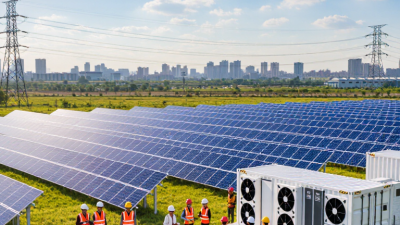
China has become a major force in the global solar power supply chain. Its manufacturers produce panels, cells, wafers, and inverters for projects ranging from village rooftops to utility-scale farms. But “best” depends on what a buyer values: conversion efficiency, long-term output, warranty support, price, or delivery reliability.
“Solar is the new king of electricity markets around the world,” said Fatih Birol, Executive Director of the International Energy Agency. The observation helps explain the attention on Chinese suppliers, but it does not make every product or company equally dependable. Buyers should compare current product specifications, independent test results, warranty terms, and service coverage in the destination market. A glossy efficiency figure alone tells only part of the story.
This guide looks at leading Chinese solar power manufacturers through practical criteria, including technology, production scale, financial stability, and customer support. It also distinguishes established global suppliers from companies whose track records may be less transparent. That matters. Project conditions differ, and even a respected brand can disappoint when installation, shipping, or after-sales service falls short. No ranking is perfect. The aim is to offer a careful starting point—not a substitute for checking product documents and project-specific needs.
What Defines a Solar Power Manufacturer in China?
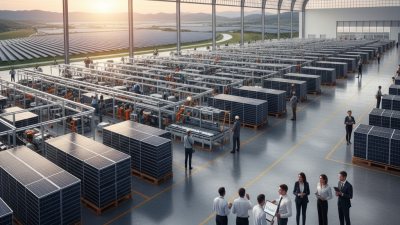
A solar power manufacturer in China is defined less by its address than by the work it controls. It should be able to show where cells, glass, encapsulant, frames, and junction boxes enter the production line, and how each batch is checked. During a factory visit, look for clearly marked material storage, calibrated test equipment, and records linking finished modules to their components. Those details matter. A polished catalogue alone does not prove manufacturing capability.
Technical credibility shows up in repeatable testing, not impressive claims. Ask how the factory checks for cell cracks, lamination defects, insulation issues, and module output, and whether it records results by batch. Confirm that certificates and test reports match the exact product model and production site. A dependable manufacturer can explain warranty terms, defect handling, and spare-parts planning in plain language. It should also disclose which steps are outsourced. That is not automatically a flaw; many factories depend on external suppliers for key components. What matters is honest disclosure and consistent quality control. No single audit tells the whole story, so compare documents with actual production practices.
How Chinese Solar Manufacturers Are Evaluated
Evaluating Chinese solar manufacturers requires more than comparing quoted prices or module efficiency. The IEA’s 2022 report, Solar PV Global Supply Chains, found that China held over 80% of global manufacturing capacity across key production stages. Scale matters, but it does not prove consistent quality. Buyers should review audited factory controls, component traceability, and batch-level test records. Ask how defects are detected before modules leave the production line. Small details count.
Technical checks should include IEC 61215 and IEC 61730 certification, power tolerance, degradation rates, and resistance to heat, humidity, and mechanical stress. Compare warranty terms carefully; a long warranty is useful only when its conditions and claims process are clear. The IRENA report Renewable Power Generation Costs in 2023 recorded a 12% decline in global utility-scale solar electricity costs from 2022. That makes lifecycle performance more important, not less. Still, laboratory results cannot replace years of field data. Independent testing, verified installation records, and transparent service procedures help reveal what a datasheet may miss. Manufacturers should also disclose material sourcing and environmental practices, with evidence that can be checked rather than broad promises.
Major Solar Power Manufacturers in China
China’s major solar power manufacturers are best understood by their role in the supply chain. Some produce wafers, cells, and modules under one roof; others focus on module assembly or specialized components. The International Energy Agency’s 2022 report, Solar PV Global Supply Chains, estimated that China held over 80% of global manufacturing capacity across key solar PV stages. Its share was especially high in wafers, at about 97%. Scale matters. It can support steady output and competitive costs, but capacity alone says little about long-term reliability.
For buyers, useful comparisons go beyond factory size. Check module efficiency, temperature performance, degradation guarantees, and independent test certifications. Ask how production batches are tracked and what quality checks occur before shipment. A large factory floor, with automated cell lines and visible inspection stations, is reassuring but not proof of field performance. Not always. IEA figures describe capacity, not the quality of every product or the delivery record of each supplier. Manufacturer claims should therefore be checked against test reports, warranty terms, and the project’s operating conditions. One detail is easy to overlook: high output under ideal laboratory conditions may not translate into the same yield on a hot, dusty site.
Who Are the Best Solar Power Manufacturers in China? — Major Solar Power Manufacturers in China
| Manufacturing Segment |
Main Product |
China’s Approximate Share of Global Manufacturing Capacity (2021) |
Role in the Solar Supply Chain |
| Polysilicon |
High-purity silicon feedstock |
79% |
Provides the raw material used to produce crystalline-silicon ingots and wafers. |
| Silicon ingots |
Crystalline-silicon blocks |
96% |
Intermediate material that is sliced into wafers for solar-cell production. |
| Solar wafers |
Thin silicon wafers |
97% |
Form the substrate on which photovoltaic cells are manufactured. |
| Solar cells |
Photovoltaic cells |
85% |
Convert sunlight into electricity and are assembled into solar modules. |
| Solar modules |
Finished photovoltaic panels |
75% |
Package interconnected cells into panels for installation in solar power systems. |
Source: International Energy Agency (IEA), Special Report on Solar PV Global Supply Chains (2022). Figures show approximate Chinese shares of global manufacturing capacity in 2021; they describe industry concentration, not individual manufacturers’ rankings, product quality, or market share.
Key Technologies and Products Offered by Chinese Manufacturers
Chinese solar manufacturers offer more than photovoltaic modules. Many produce monocrystalline silicon panels using TOPCon, heterojunction, or established PERC cell designs. These technologies balance conversion efficiency, temperature behavior, and production cost differently. A higher efficiency figure is useful, but it does not tell the whole story.
Product ranges often include bifacial modules, string inverters, battery systems, and mounting structures. Bifacial panels can collect reflected light from suitable surfaces, such as pale gravel or concrete. Inverters convert panel output into usable electricity and may provide monitoring data for individual strings. Battery options can store daytime generation for evening use. Check whether system components are designed to work together.
Manufacturers also describe testing for mechanical loads, humidity, and temperature cycling. Ask for test reports, product warranties, and clear performance assumptions, rather than relying on headline claims. Field conditions can differ from laboratory conditions. That gap matters. Panel output depends on installation angle, shading, ventilation, and local weather. Specifications may look precise, yet real projects still require careful design and independent verification. Some product sheets are hard to compare; that is worth questioning.
How to Compare Chinese Solar Manufacturers for Different Needs
Comparing Chinese solar manufacturers starts with your project, not a popularity ranking. Utility-scale buyers may prioritize bankability, large-volume delivery, and consistent module output. For a rooftop system, dimensions, low-light performance, warranty terms, and local technical support can matter more. IRENA’s Renewable Capacity Statistics 2024 reports that China added 216.9 GW of solar capacity in 2023. That scale offers broad supplier choice, but factory size alone does not prove dependable quality.
Compare product data under the same test conditions. Review module efficiency, temperature coefficient, degradation warranty, and independent test results. Ask how production batches are traced and how defects are handled. Check whether delivery schedules, packaging, and spare-stock arrangements fit your site. A polished datasheet helps. Field performance matters more. Warranty wording can also be less clear than expected, so read the exclusions and claim process carefully. No single metric settles the decision.
Tips: Request sample certificates and a batch-level test report. Compare landed cost, not just quoted price. Confirm who answers technical questions after installation. A small pilot order may reveal packaging or communication issues, though it cannot guarantee long-term performance.
Comparing Commercial Solar Module Technologies
Indicative module-efficiency ranges for technology types widely manufactured in China—not rankings of individual manufacturers.
How to use this: Higher-efficiency modules can help where roof or land area is limited. Compare the specific product’s certified specifications, warranty terms, degradation rate, price, and suitability for your project; actual performance varies by product and conditions.