






The Best Residential Solar Panels of 2026 for Your Home?

As the demand for sustainable energy grows, the future of residential solar panels looks promising. Industry reports indicate that the solar energy market is projected to reach $223 billion by 2026. Homeowners are increasingly interested in reducing their carbon footprint, and residential solar panels offer a viable solution. Currently, over 3 million U.S. homes utilize solar panels, showcasing a significant shift towards clean energy sources.

While making the leap to solar energy is appealing, challenges remain. Many homeowners may struggle with the upfront costs, while others might question the effectiveness of certain solar technologies. Not all residential solar panels are created equal, and it's crucial to understand the differences in efficiency, durability, and warranties. Researching credible sources can help homeowners make informed decisions about the right systems for their needs.

With rapid advancements in technology, the choices can be overwhelming. Understanding what to look for in residential solar panels is essential. Homeowners need to weigh the long-term savings against immediate expenses carefully. The right solar panel system can enhance home value and provide significant savings on utility bills, but it's essential to approach the selection process with diligence and careful consideration.
The Best Residential Solar Panels of 2026 for Your Home?

Overview of Residential Solar Panels Available in 2026
The Best Residential Solar Panels of 2026 for Your Home?

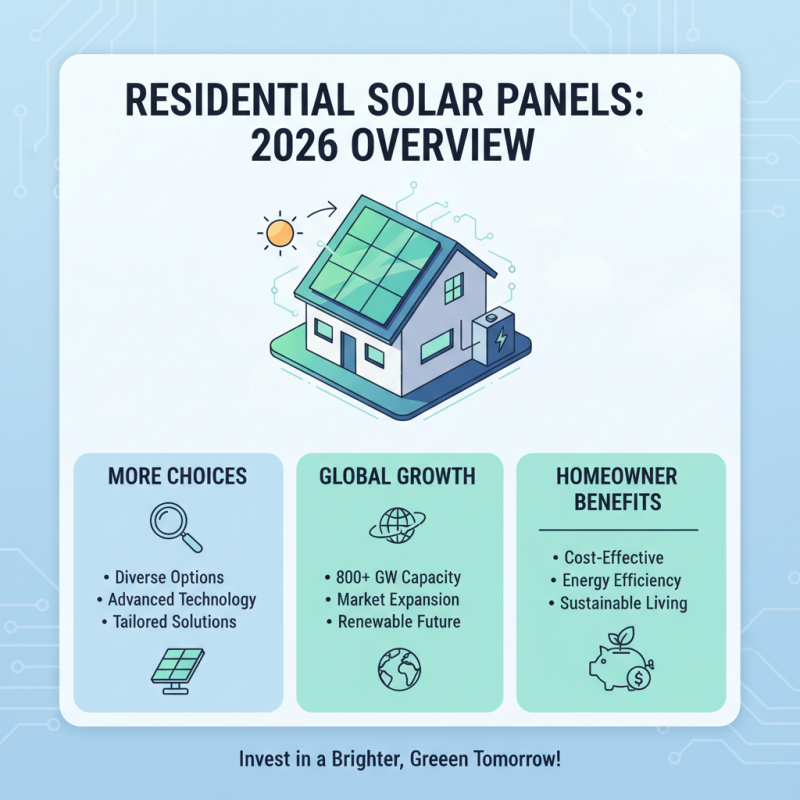
In 2026, the residential solar panel market offers diverse options. Homeowners have more choices than ever. A recent report indicates that global solar capacity is projected to reach over 800 gigawatts by the end of the year. This surge allows homeowners to invest in efficient and cost-effective solutions.

Efficiency remains a critical factor when selecting solar panels. Most models now achieve 20-22% efficiency rates, which is much higher than previous years. Not all homeowners see significant reductions in energy bills, though. Some installations may not perform as expected due to shading issues or suboptimal roof angles. This highlights the importance of thorough assessments before investing.

Cost-effectiveness is also crucial. The average price of solar panels has fallen by nearly 30% in the past five years. However, upfront costs can still deter potential buyers. The return on investment varies greatly and depends on local incentives and energy prices. Some homeowners report waiting five to ten years to see a full payoff from their solar investments. Addressing these concerns can help ensure a more sustainable and economically viable choice for energy needs.

Key Features to Consider When Choosing Solar Panels for Your Home

When selecting solar panels for your home, start with efficiency ratings. Most residential panels boast efficiencies between 15% and 22%. Higher efficiency means more sunlight converted into energy. This aspect could significantly influence your energy bills. A recent report indicated that homes with higher efficiency panels save up to 30% on annual energy costs.

Another key feature is the durability of solar panels. Look for panels with a good warranty period, typically around 25 years. This suggests long-lasting performance. Some panels can withstand harsh weather, while others may not. It’s essential to choose panels designed for your region's climate, considering factors like hail or extreme temperatures.

Costs vary widely. Expect to invest between $15,000 and $25,000 for a complete solar system. An analysis found that homeowners recoup about 80% of their initial investment. However, this varies based on local electricity rates and available incentives. Assess available rebates and tax credits carefully. They can significantly affect the overall expense and savings of your solar installation.

Top Brands and Models of Solar Panels in 2026

The Best Residential Solar Panels of 2026 for Your Home?

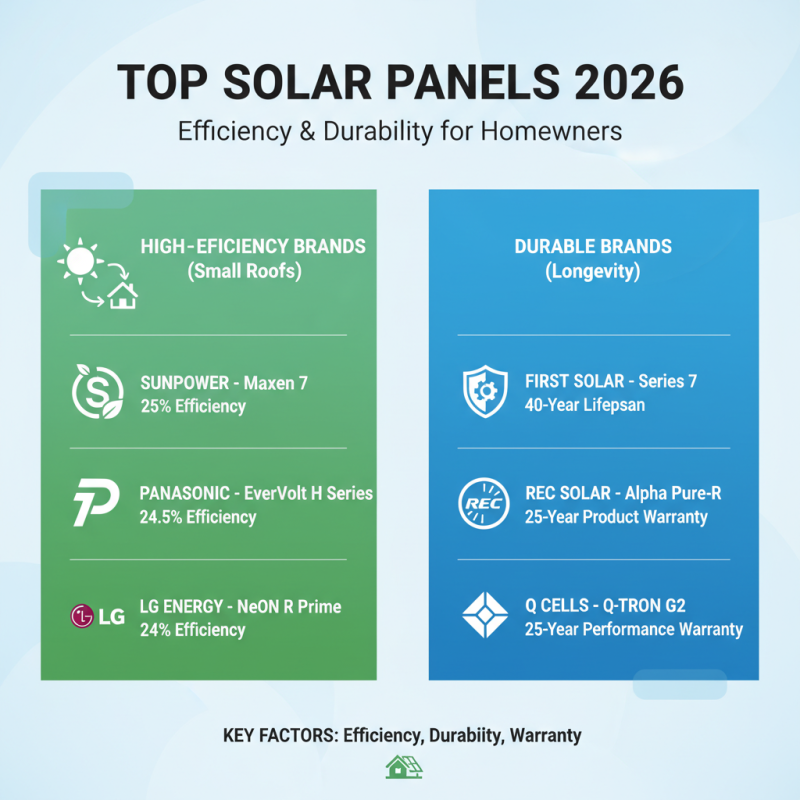
As homeowners consider switching to solar energy, the choice of panel is crucial. In 2026, several brands and models stand out based on efficiency and durability. High-efficiency panels convert more sunlight into electricity, making them ideal for smaller roofs. Look for options that guarantee longevity, as life expectancy varies among manufacturers.

Some models claim high performance, but their real-world results might fall short. Test reviews from reliable sources show discrepancies. Certain panels may not perform well in low-light conditions, which is an essential factor for many homeowners. Doing thorough research is vital.

Quality varies, and not every brand offers the same level of reliability. Installation practices also influence long-term performance. Not all installers adhere to the same standards. Therefore, understanding both the product and the installation process is key. Homeowners should seek detailed specifications and user experiences to guide their decisions.

Comparative Analysis of Efficiency and Cost-Effectiveness

When considering solar panels for your home, efficiency and cost-effectiveness are key factors. Data from the National Renewable Energy Laboratory (NREL) indicates that top solar panels can achieve conversion efficiencies exceeding 22%. These high-efficiency panels generate more electricity with less space, making them ideal for residential use. However, the upfront costs can be daunting. On average, homeowners might pay around $15,000 to $25,000 for a complete solar system.

Navigating this market can be tricky. A recent study reveals that while cheaper panels may save money initially, they often lack longevity and warranties. Many budget options degrade faster, ultimately costing more in replacements and maintenance. It's essential to balance upfront expenses against long-term savings. Aim for panels with good warranties, typically around 25 years, to ensure reliability.

Tips: Always compare the levelized cost of electricity (LCOE) across models. This metric shows you what you'll pay per kilowatt-hour generated over time. Investing in solar can seem overwhelming, yet the long-term savings often justify the initial investment. Look for solar lending options or state incentives that can ease the financial burden. Evaluate your energy needs and roof space carefully before finalizing choices.

The Best Residential Solar Panels of 2026 for Your Home? - Comparative Analysis of Efficiency and Cost-Effectiveness

Panel Model Efficiency (%) Cost per Watt ($) Payback Period (Years) Warranty (Years)
Model A 22.5 3.00 5 25
Model B 21.0 2.80 6 30
Model C 19.5 3.50 7 25
Model D 24.0 3.20 5 25

Future Trends in Residential Solar Technology to Watch in 2026

As we approach 2026, trends in residential solar technology are evolving rapidly. New research from the Solar Energy Industries Association shows that solar installations in homes are projected to grow by over 25% annually. Innovations focus on efficiency, cost reduction, and environmental impact. Smart solar panels, integrated with AI, can optimize energy usage by adjusting to household consumption patterns. This shift could enhance energy savings significantly.

In addition, energy storage systems have advanced tremendously. The latest lithium-ion batteries now boast greater longevity and reduced costs. This technology enables homeowners to store excess energy generated during the day for use at night. Reports indicate that homeowners with these systems can save up to 40% on their electricity bills. However, reliability issues and recycling concerns still linger, urging continued research in these areas.

Tip: Explore local incentives for solar installation. Many regions offer financial assistance that can make switching to solar significantly more affordable. Always compare efficiency ratings before making a purchase. Balance cost with quality to ensure long-term benefits. Investing in solar is not just about immediate savings; it's about future-proofing your home.

© 2025 Australian Premium Solar