Top Benefits of Solar Energy for a Sustainable Future?
As the world grapples with climate change, the role of solar energy becomes increasingly vital. Dr. Emily Carter, a renowned expert in renewable energy, states, "Solar energy is a key part of our sustainable future." Her words resonate as communities seek cleaner alternatives. Solar energy transforms sunlight into power, significantly reducing greenhouse gas emissions.
Imagine rooftops sparkling under the sun, converting light into clean electricity. Each solar panel represents a step towards sustainability. However, challenges remain. Not everyone can access solar technology due to costs or infrastructure issues. This gap highlights the need for inclusive solutions.
Investing in solar energy not only benefits the environment but also stimulates economic growth. Industries pivot towards this cleaner energy source. Yet, the transition requires careful planning. A balanced approach ensures that solar energy adoption is not only effective but equitable. Solar energy stands at the forefront of a sustainable future, inviting us all to reflect on our energy choices.

The Role of Solar Energy in Reducing Greenhouse Gas Emissions
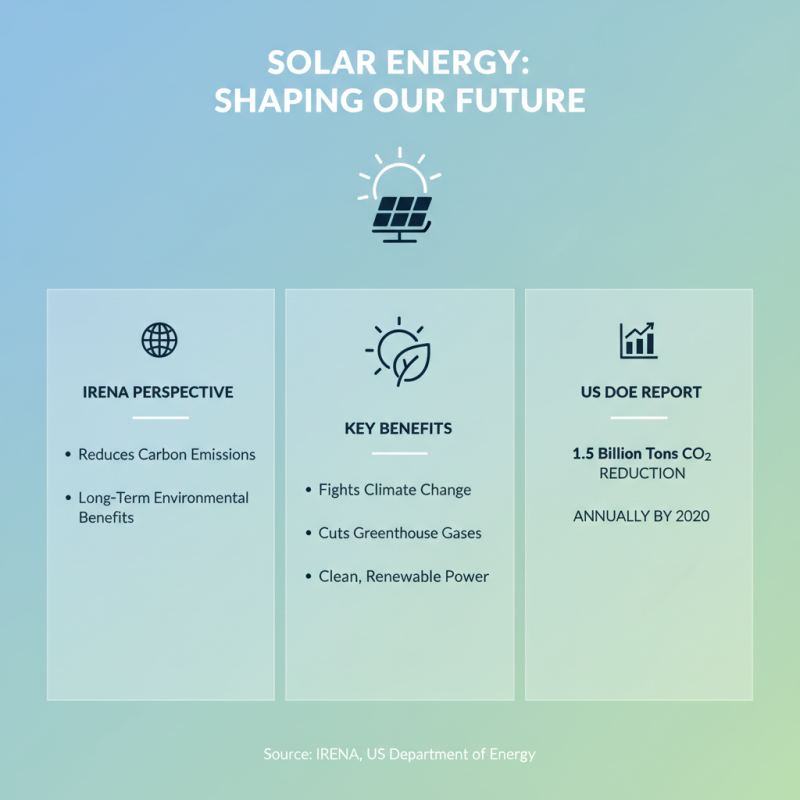
Solar energy plays a crucial role in mitigating greenhouse gas emissions. By harnessing sunlight, we can significantly reduce our reliance on fossil fuels. Traditional energy sources release large quantities of carbon dioxide into the atmosphere. In contrast, solar energy systems produce electricity without these harmful emissions. As the technology becomes more accessible, more households are making the switch.
The transition to solar is not without challenges. Initial installation costs can be high for some families. However, the long-term savings on energy bills are substantial. Many regions also offer tax incentives. Communities have observed improved air quality as solar adoption increases. Yet, areas without proper sunlight may face limitations in harnessing this energy effectively. It becomes clear that there is much to learn as we pursue a cleaner energy future.
Adopting solar energy has environmental implications and societal ones. People must consider the impact of manufacturing solar panels. The process can also produce waste if not managed well. Ongoing research is essential to minimize these effects. The goal is to create a sustainable energy landscape that benefits everyone. Solar energy’s potential is vast, but we must tread carefully.
Economic Advantages of Solar Energy: Cost Savings and Job Creation
Solar energy is more than just a clean alternative. Its economic advantages are substantial. According to the U.S. Solar Industry Association (SEIA), solar energy has generated over 250,000 jobs in the United States alone. This number continues to grow as solar installations increase. These jobs are not just for engineers; they encompass a variety of roles, including sales, installation, and maintenance.
The cost savings associated with solar energy are striking. A report from the National Renewable Energy Laboratory indicates that households can save an average of $30,000 on energy bills over 20 years. However, not every household can afford the initial investment. This raises questions about accessibility and equity in solar energy adoption. While some states offer incentives, others lag behind, making it uneven across the country.
Furthermore, the shift to solar energy is affecting local economies positively. Communities see increased tax revenues from solar installations. Still, there are challenges in integrating this energy into existing grids. Infrastructure upgrades are needed, and funding these improvements can be tricky. The economic benefits are clear, but implementation requires careful planning.
Solar Energy's Contribution to Energy Independence and Security
Solar energy plays a crucial role in enhancing energy independence and security. By harnessing the sun's power, countries can reduce reliance on imported fossil fuels. This independence strengthens national security. When energy sources are homegrown, the risk of geopolitical tensions diminishes.
Transitioning to solar energy can be challenging. Infrastructure investments are required, and not all regions have equal access to sunlight. Some communities may struggle to implement solar technology. However, developing innovative solutions can bridge these gaps. Investing in local solar projects can create jobs and empower communities.
Furthermore, solar energy provides a consistent energy supply, which enhances grid stability. Unlike fossil fuels, solar power does not deplete natural resources. This sustainability factor is crucial for a reliable energy future. Everyone needs to acknowledge the hurdles while actively seeking solutions. Embracing solar energy can lead to a more secure and sustainable world.
Top Benefits of Solar Energy for a Sustainable Future
Technological Innovations Driving Solar Energy Efficiency and Accessibility
Technological innovations are transforming solar energy. The efficiency of solar panels has increased significantly. In recent years, conversion rates now exceed 22% for many models. New materials, like perovskite, promise even higher efficiencies. These advancements make solar energy more viable than ever.
Accessibility is another critical focus. Recent studies show that solar installations dropped by 20% in cost over the last decade. This cost reduction enables more homes to adopt solar solutions. Community solar projects are also rising. These initiatives allow groups to invest in shared solar resources. They give non-homeowners access to renewable energy, expanding its reach.
However, challenges remain. Energy storage technology needs improvement. Current batteries still have limitations in capacity and lifespan. Solar energy production also fluctuates, depending on weather conditions. This inconsistency can deter potential adopters. Addressing these issues is crucial for a sustainable future. Improved grid integration and energy management solutions will be vital for maximizing solar's potential.