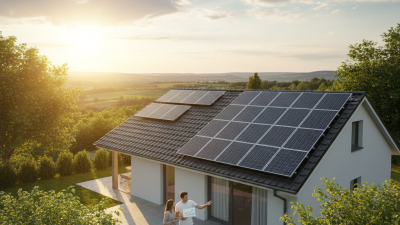
| Grid-Tied Solar System |
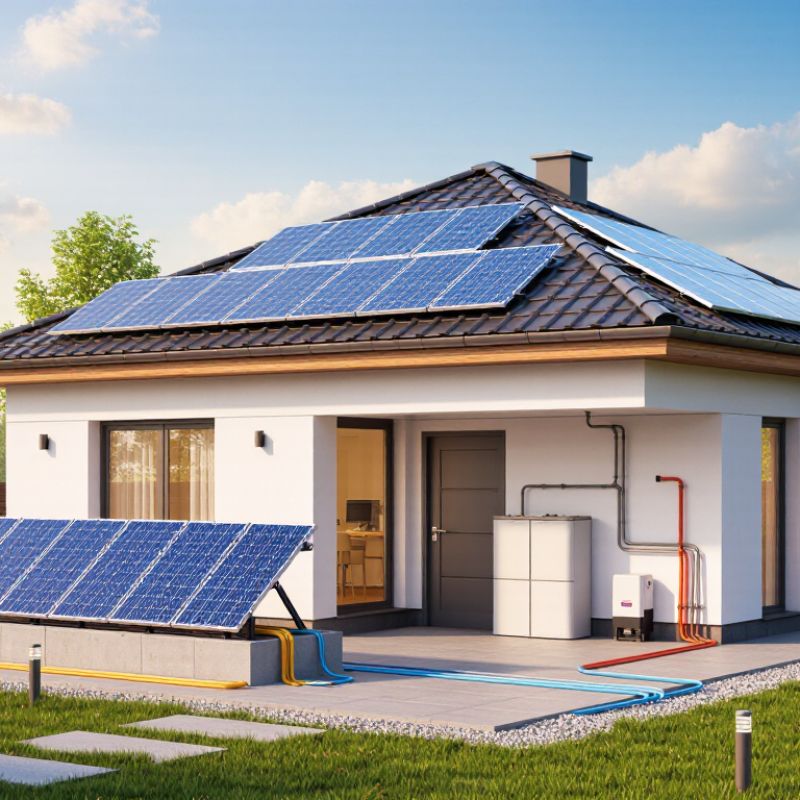
Solar modules, grid-connected inverter, mounting structure, protection devices, and a bidirectional utility meter. |
Not required. |
Normally no. Standard grid-tied inverters shut down during a utility outage for anti-islanding safety. |
Approximately 96%–99% through the inverter, depending on equipment and operating conditions. |
Areas with reliable electricity grids, net-metering or export-credit programs, and high daytime household consumption. |
Lowest equipment cost among the main system types; simple operation; strong daytime bill reduction; no battery replacement cost. |
Solar energy cannot normally be used during a grid failure; savings depend on local export rules and electricity tariffs. |
Grid reliability, export compensation, roof orientation, shading, inverter standards, and local interconnection requirements. |
| Hybrid Solar System |
Solar modules, hybrid inverter, battery storage, essential-load panel, protection equipment, and optional grid or generator connection. |
Yes. Common residential storage sizes are approximately 5–20 kWh, depending on the backup load and desired autonomy. |
Yes, when the inverter, battery, and backed-up circuits are correctly sized and installed. |
Approximately 85%–95% for a complete battery charge-and-discharge cycle; actual results vary by battery chemistry, temperature, power level, and inverter architecture. |
Markets with frequent outages, time-of-use tariffs, limited export compensation, or high evening electricity demand. |
Combines bill savings with backup power; stores surplus daytime energy; can support load shifting and, where permitted, backup generator integration. |
Higher purchase cost, more complex installation, battery aging, and possible capacity loss in cold or hot conditions without suitable thermal management. |
Critical-load definition, battery usable capacity, continuous and surge power, backup transition time, operating temperature, and warranty terms. |
| Off-Grid Solar System |
Solar modules, off-grid inverter or inverter-charger, battery bank, charge-control equipment, distribution board, and often a backup generator. |
Yes. Storage is essential for night-time use and periods of low solar production. |
The property is independent of the utility grid; backup duration depends on battery capacity, solar resource, and load management. |
Approximately 75%–92% from solar generation to AC household use after charge, discharge, and conversion losses. |
Remote homes, islands, rural properties, weak-grid locations, and sites where grid extension is expensive or unavailable. |
Energy independence; avoids utility connection costs; suitable for remote locations; can be designed around essential loads. |
Requires careful energy planning; larger battery and solar capacity may be needed; prolonged cloudy weather can require load reduction or generator support. |
Daily and seasonal energy demand, worst-month solar irradiation, battery autonomy, generator strategy, water-pumping loads, and maintenance access. |
| AC-Coupled Solar and Storage System |
An existing or new grid-tied solar inverter combined with a separate battery inverter and battery bank. |
Yes for storage operation; the solar array itself can operate without a battery when the grid is available. |
Usually yes, if the battery inverter provides an islanded backup output and the essential-load circuits are separated. |
Approximately 80%–93% for solar-to-battery-to-load pathways because energy may undergo multiple AC/DC conversions. |
Homes upgrading an existing solar installation, especially where replacing a functioning solar inverter is undesirable. |
Flexible retrofit option; can add storage to many existing systems; separates solar and battery inverter functions. |
Additional conversion losses; backup compatibility must be verified; existing inverter age and communication protocols can affect performance. |
Existing inverter compatibility, backup architecture, export-control requirements, available space, and total retrofit cost. |
| DC-Coupled Solar and Storage System |
Solar modules connected to a hybrid inverter or shared DC power-conversion system with a battery connected on the DC side. |
Optional for basic grid-tied operation but required for storage and backup functions. |
Yes, when the hybrid inverter includes backup capability and the system is configured for islanded operation. |
Approximately 85%–96% for solar-to-battery pathways, with potentially fewer conversion steps than AC-coupled designs. |
New-build installations where solar generation and battery storage are planned together, particularly where clipping reduction is valuable. |
Efficient battery charging from solar; may capture energy that would otherwise be limited by inverter capacity; compact integrated design. |
Less convenient for some retrofits; component compatibility and maximum DC voltage must be carefully checked; system expansion may be limited. |
Array-to-inverter sizing, battery voltage range, maximum DC input, future expansion, shading, and local electrical-code compliance. |
| Solar System with Generator Support |
Solar array, battery storage, hybrid inverter or inverter-charger, and an automatically or manually controlled backup generator. |
Strongly recommended and commonly required for efficient generator operation and reduced fuel consumption. |
Yes. The battery can cover short interruptions while the generator supports extended low-solar periods or heavy loads. |
Approximately 75%–93% for solar and battery pathways; generator fuel efficiency depends on loading and operating conditions. |
Remote regions, areas with long outages, critical residential loads, and locations with seasonal storms or highly variable solar availability. |
High resilience; reduces generator runtime; supports heavy or extended loads; provides a practical solution for low-sun periods. |
Higher installation and maintenance complexity; fuel, noise, emissions, and generator servicing remain part of the operating model. |
Generator compatibility, automatic-start controls, fuel availability, required runtime, noise restrictions, critical-load power, and maintenance capability. |