2026 Best Spa Chiller for Global Buyers?
Choosing the 2026 Best Spa Chiller for Global Buyers requires more than comparing cooling capacity and price. A reliable Spa Chiller should maintain stable water temperatures during repeated use, even in humid outdoor environments. Buyers should examine compressor quality, heat-exchanger materials, flow requirements, noise levels, and service access. A unit that performs well in a showroom may struggle beside a sun-heated pool. Real installation conditions matter.
This guide considers practical feedback from spa installers, maintenance teams, and commercial operators. It also reviews manufacturer specifications, warranty terms, energy performance, and replacement-part availability. Check the details carefully. Regional voltage, water chemistry, climate, and shipping conditions can change the final decision. Stainless steel may resist corrosion, but it does not remove the need for proper water treatment. Energy-saving claims also need independent verification.
No ranking is perfect. Some data may depend on laboratory testing rather than long-term field use. That limitation deserves attention. Global buyers should request test reports, installation guidance, and references from similar projects before ordering. A compact chiller may suit a private spa, while a larger facility needs stronger flow control and continuous-duty performance. The best choice balances cooling consistency, operating cost, technical support, and realistic maintenance needs. Good equipment should feel predictable: quiet operation, clear controls, steady water temperature, and fewer unpleasant surprises after installation.
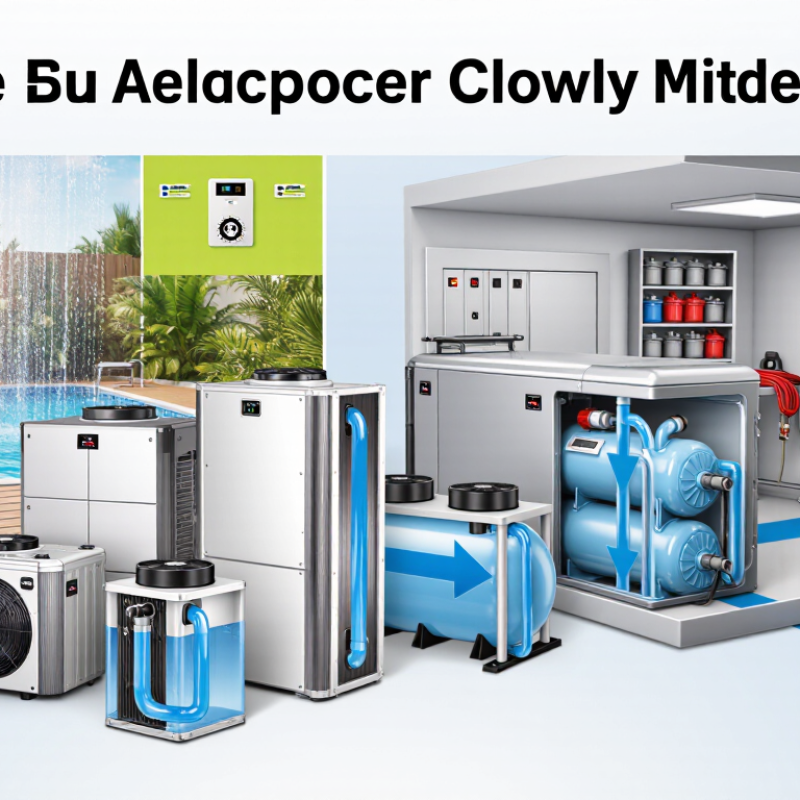
Spa Chiller Basics: Cooling Loads, Setpoints, and 3.517 kW per Refrigeration Ton
A spa chiller’s cooling load is more than the water volume. It includes the starting water temperature, target setpoint, room temperature, sunlight, bathers, pumps, and uncovered surface area. A large acrylic spa under direct sun may gain heat quickly. A fitted cover reduces that gain, but it does not remove it.
1 refrigeration ton = 12,000 BTU/h = 3.517 kW
One refrigeration ton equals 12,000 BTU/h, or 3.517 kW of cooling capacity. This is heat removed, not electrical power consumed. For example, a 7.034 kW cooling requirement equals two refrigeration tons. The chiller may draw less or more electrical power, depending on efficiency, ambient temperature, and compressor control. Buyers should request performance data at their real entering-water and outdoor conditions.
Set the temperature for the application, not for a catalogue headline. A lower setpoint increases the temperature difference and usually extends pull-down time. Calculate the energy needed to cool the water, then add heat entering during operation. Commissioning should confirm supply voltage, flow rate, water temperature, and pressure drop. Small errors matter.
A neat spreadsheet is not the whole truth. Real sites often have open covers, warm pump rooms, or underestimated user loads. Leaving design margin is sensible, but excessive oversizing can cause short cycling and poor humidity control. Regional climate data and local electrical requirements also deserve careful review before purchase.
Sizing a Spa Chiller: Pool Volume, Heat Gain, Flow Rate, and 1 kW = 3,412 BTU/h
2026 Best Spa Chiller for Global Buyers?
Sizing a spa chiller begins with water volume, not horsepower. Measure the actual water capacity, including pipes and the balancing tank. For example, 2,000 liters of water needs about 23.3 kWh of cooling to drop 10°C, before considering environmental losses. If the target pull-down takes four hours, the chiller needs roughly 5.8 kW of thermal capacity, or about 19,800 BTU/h.
The conversion matters. One kilowatt of cooling equals approximately 3,412 BTU/h. However, this describes thermal capacity, not electrical consumption. A unit using 1 kW of electricity may deliver more than 1 kW of cooling, depending on efficiency and operating conditions. Check the rated capacity at your actual water temperature and outdoor temperature.
Heat gain can change the result quickly. Direct sunlight, an uncovered spa, warm surrounding air, and frequent bathing all add load. A fitted cover helps, but it does not erase heat gain. Flow rate also deserves attention. Too little flow can trigger protection controls or create uneven cooling, while excessive flow may increase pump energy. Match the chiller’s required flow with the filtration system and confirm pipe diameter.
In practice, a neat spreadsheet can still be wrong. Field readings often reveal warmer return water than expected. Leave a sensible capacity margin, perhaps 10% to 20%, after calculating the real load. Oversizing is not always better; short cycling can reduce control stability and efficiency. Check voltage, frequency, ambient limits, and local electrical requirements before ordering.
2026 Best Spa Chiller for Global Buyers? - Sizing a Spa Chiller: Pool Volume, Heat Gain, Flow Rate, and 1 kW = 3,412 BTU/h
Core sizing method: Required cooling capacity = [Water volume × 8.34 lb/gal × Temperature reduction ÷ Pull-down time] × Heat-gain allowance. The calculations below use a 20°F temperature reduction, an 8-hour pull-down period, and a 25% allowance for normal ambient and operating heat gain.
| Typical Spa Water Volume | Target Temperature Reduction | Design Pull-Down Time | Water-Only Cooling Load | Heat-Gain Allowance | Total Design Load | Total Load in kW | Minimum Flow for 1-Hour Turnover | Practical Flow Range
for 1–1.5 Turnovers/Hour | Suggested Nominal Chiller Capacity |
300 US gal
(1,136 L) | 20°F
(11.1°C) | 8 hours | 6,255 BTU/h | 25%
(1,564 BTU/h) | 7,819 BTU/h | 2.29 kW | 5.0 GPM
(18.9 L/min) | 5.0–7.5 GPM
(18.9–28.4 L/min) | 2.5 kW
(8,530 BTU/h) |
500 US gal
(1,893 L) | 20°F
(11.1°C) | 8 hours | 10,425 BTU/h | 25%
(2,606 BTU/h) | 13,031 BTU/h | 3.82 kW | 8.3 GPM
(31.5 L/min) | 8.3–12.5 GPM
(31.5–47.3 L/min) | 4.0 kW
(13,648 BTU/h) |
800 US gal
(3,028 L) | 20°F
(11.1°C) | 8 hours | 16,680 BTU/h | 25%
(4,170 BTU/h) | 20,850 BTU/h | 6.11 kW | 13.3 GPM
(50.4 L/min) | 13.3–20.0 GPM
(50.4–75.7 L/min) | 7.5 kW
(25,590 BTU/h) |
1,200 US gal
(4, ಮಾಡಿದ L) | 20°F
(11.1°C) | 8 hours | 25,020 BTU/h | 25%
(6,255 BTU/h) | 31,275 BTU/h | 9.17 kW | 20.0 GPM
(75.7 L/min) | 20.0–30.0 GPM
(75.7–113.6 L/min) | 10.0 kW
(34,120 BTU/h) |
Important design notes: - 1 kW of cooling capacity equals approximately 3,412 BTU/h.
- Water weight is estimated at 8.34 lb per US gallon. One BTU raises 1 lb of water by 1°F.
- Flow values are based on one complete water turnover per hour. The actual required flow must remain within the chiller heat-exchanger and pump specifications.
- The 25% heat-gain allowance is a planning assumption for a covered or moderately protected spa. Outdoor sunlight, high ambient temperature, wind, uncovered operation, bathers, pumps, and nearby equipment can require additional capacity.
- For faster pull-down, multiply the water-only cooling load by 8 divided by the desired pull-down time in hours, then add the applicable heat-gain allowance.
2026 Efficiency Metrics: COP, EER, IEER, and ISO 5151 Performance Testing
2026 Best Spa Chiller for Global Buyers?
For spa cooling, COP, EER, and IEER reveal different operating realities. COP compares cooling output with electrical input under one test condition. EER uses Btu per watt-hour, and 1 COP equals approximately 3.412 EER. The comparison only works when temperatures, water flow, and fan power match.
ASHRAE Standard 550/590-2023 uses IEER to reflect part-load operation. Its weighting assigns 2% at full load, 61% at 75% load, 24% at 50%, and 13% at 25%. That matters in spas. Water demand changes constantly. A chiller rated at 5.8 COP may perform poorly during low-occupancy hours.
Check the tested entering and leaving water temperatures. Also check whether pumps and controls are included.
Focus
Standardized testing
Key concern
Field performance
ISO 5151:2017 provides standardized rating and testing procedures for air conditioners and heat pumps. It improves comparison across markets, but it does not guarantee identical field performance. Installation airflow, condenser fouling, humidity, and voltage imbalance can reduce efficiency. Small rooms can expose poor control logic quickly.
Measure power at the site. Do not trust the brochure alone. A sensible specification should request capacity, COP, EER, IEER, test conditions, sound data, and tolerance limits.
I would also question unusually high efficiency claims without an independent test report. That extra caution feels slow, yet it prevents expensive sizing mistakes.
Refrigerant Choices: R290 GWP 3, R32 GWP 675, and R410A GWP 2,088
For global buyers in 2026, the best spa chiller is not chosen by cooling capacity alone. Refrigerant selection now affects climate impact, service training, safety procedures, and future compliance.
R290 100-year GWP: about 3
R32 100-year GWP: 675
R410A 100-year GWP: 2,088
The IPCC Fourth Assessment Report lists R290 at a 100-year GWP of about 3, R32 at 675, and R410A at 2,088. These figures make the difference visible: one R410A system can carry far greater warming impact than an equivalent R290 system after leakage.
R290, or propane, offers very low GWP and strong thermodynamic performance. However, it is highly flammable, so equipment design, charge limits, ventilation, electrical protection, and technician qualification require careful review.
R32 has a much lower GWP than R410A and can support compact, efficient systems. It remains mildly flammable. R410A is familiar to many installers, but its high GWP creates greater long-term pressure under the Kigali Amendment and regional F-gas policies. Familiar does not mean future-proof.
The UNEP 2022 Technology and Economic Assessment Panel reports that refrigerant transitions require both technical capability and responsible recovery practices. Buyers should request tested performance data at realistic spa water temperatures, not only ideal laboratory values. Check sound levels, ambient-temperature operation, leak detection, and parts availability.
A low-GWP label alone is not enough. In practice, the “best” chiller may change by market. I would also question whether every supplier can service R290 safely. That uncomfortable question is often more valuable than a cheaper quotation.
Global Compliance Checklist: ISO 5149, EN 378, ASHRAE 15, and CE Marking
For global buyers, the best spa chiller in 2026 is not simply the coldest machine. It must fit the installation country's safety framework. ISO 5149 helps assess refrigerating system design, pressure hazards, refrigerant risks, and operating procedures. EN 378 adds detailed European requirements for system safety, installation, and service. These standards guide engineering decisions, but they do not automatically replace local laws. A supplier should provide current declarations, risk assessments, drawings, and test records. Ask for the exact model and refrigerant, not a generic certificate.
For projects using United States requirements, ASHRAE 15 is a key reference for refrigerant safety, machinery rooms, detection, ventilation, and control measures. Local building and electrical authorities may impose additional rules. CE marking applies when relevant European Union legislation covers the product. It is the manufacturer's declaration of conformity, not a universal quality award. Check the technical file, applicable directives or regulations, harmonized standards, and declaration date. Refrigerant charge limits deserve attention, especially in compact spa rooms with weak airflow.
Tips: Compare the nameplate with the declaration and wiring diagram. Confirm pressure-vessel documentation and electrical test reports. Record ambient temperature, water temperature, altitude, and sound limits before ordering. Keep service access clear around filters and valves. Paperwork is not everything. A practical review can still find missing emergency isolation details or poor maintenance access. Request written clarification before payment.
2026 Best Spa Chiller for Global Buyers: Global Compliance Checklist
This chart maps the primary compliance areas addressed by ISO 5149, EN 378, ASHRAE 15, and CE marking. A value of 1 means the area is directly relevant to the framework; 0 means it is not the framework’s primary function.
ISO 5149 and EN 378 focus on refrigeration-system safety and environmental requirements. ASHRAE 15 focuses on the safe design, construction, installation, and operation of refrigeration systems. CE marking is an EU conformity-marking process, not a standalone technical standard, and applies only when relevant EU legislation covers the product.
Reference sources: ISO 5149 · EN 378 · ASHRAE 15 · European Commission CE Marking